
swell of spæc(i)es
Josèfa Ntjam
LAS Foundation x 60th Venice Biennale | Venice, IT
Institutional
20.04.24 - 24.11.24Solo exhibition commissioned by LAS Foundation as an official collateral event of the 60th Venice Biennale
Venice, IT
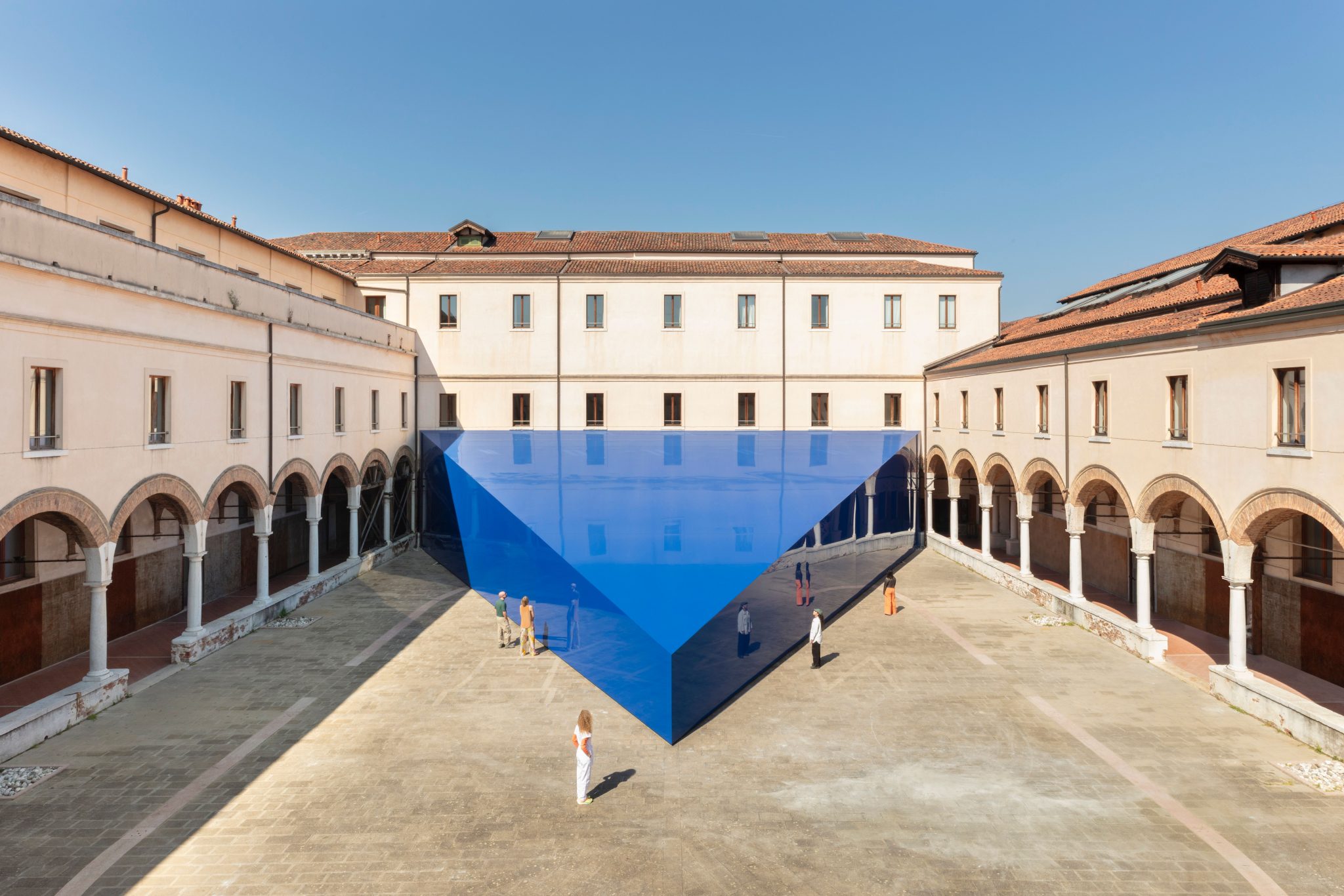
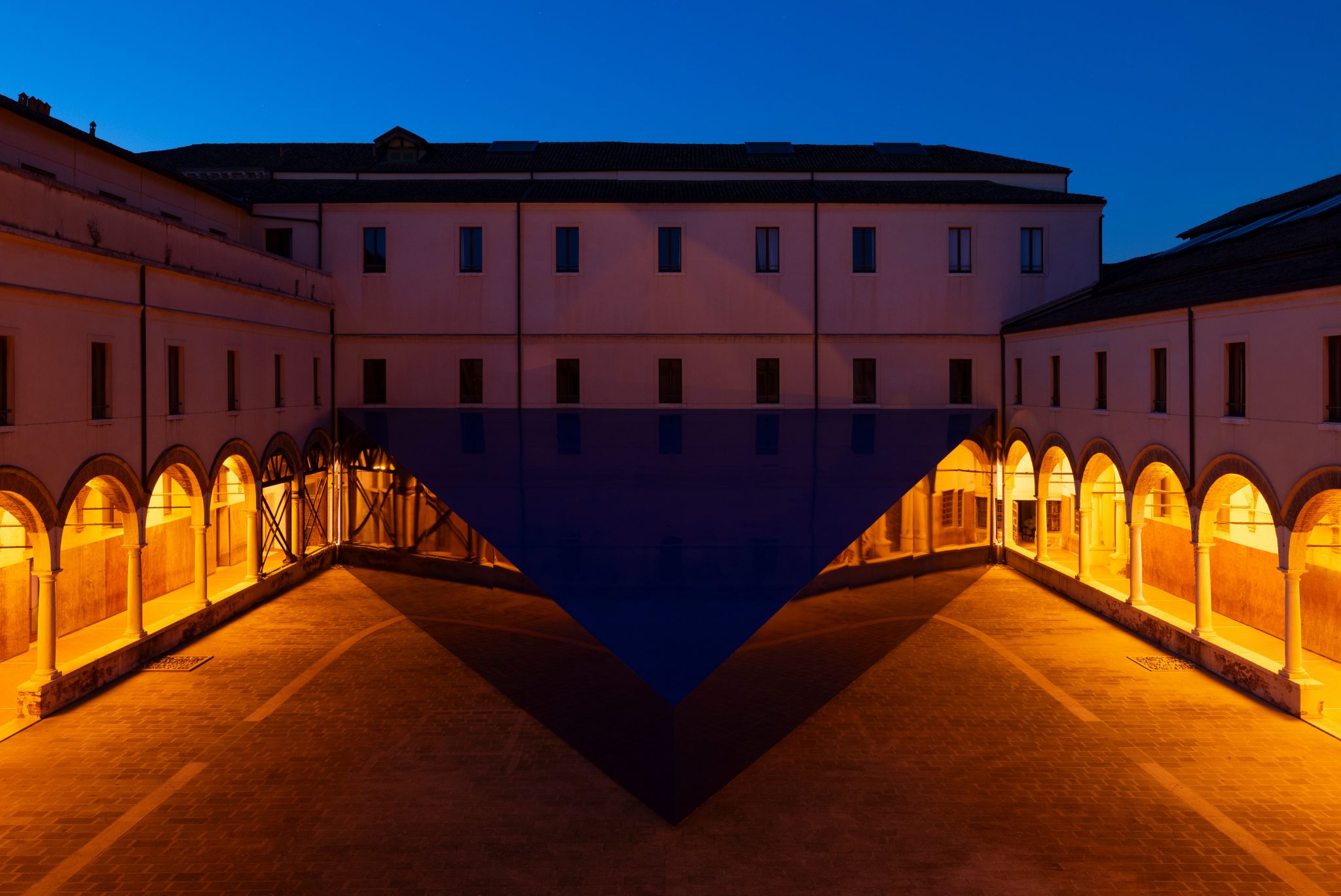
Josèfa Ntjam’s swell of spæc(i)es was commissioned by LAS Art Foundation and first presented as a collateral event of the 60th Venice Biennale. Following its premiere, swell of spæc(i)es was exhibited at PHI in Montréal, Canada (10.09.26–11.01.26).
“Josèfa Ntjam’s artistic practice forges new myths and science fiction narratives that carry forward African and Afro-diasporic oral histories, knowledge systems and resistance movements. She fuses these stories with micro and macro-scale observations of the universe, from the resilience of tiny organisms to dark matter, forming speculative worlds rife with new alliances. Vivid, poetic and intricately layered, her works span moving image, photomontage, sculpture, text and performance. They are characterised by strong senses of movement, transformation and interconnection.
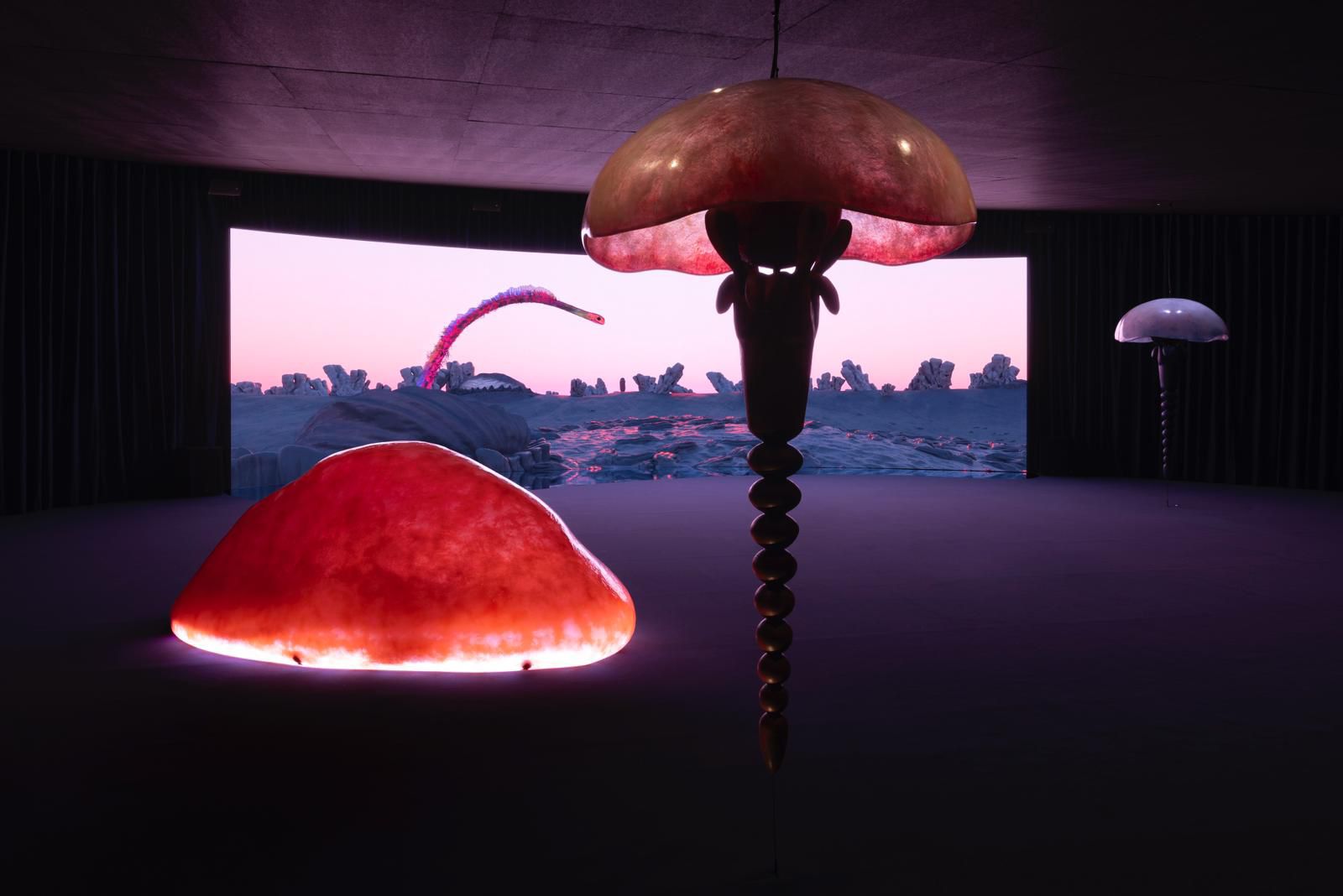
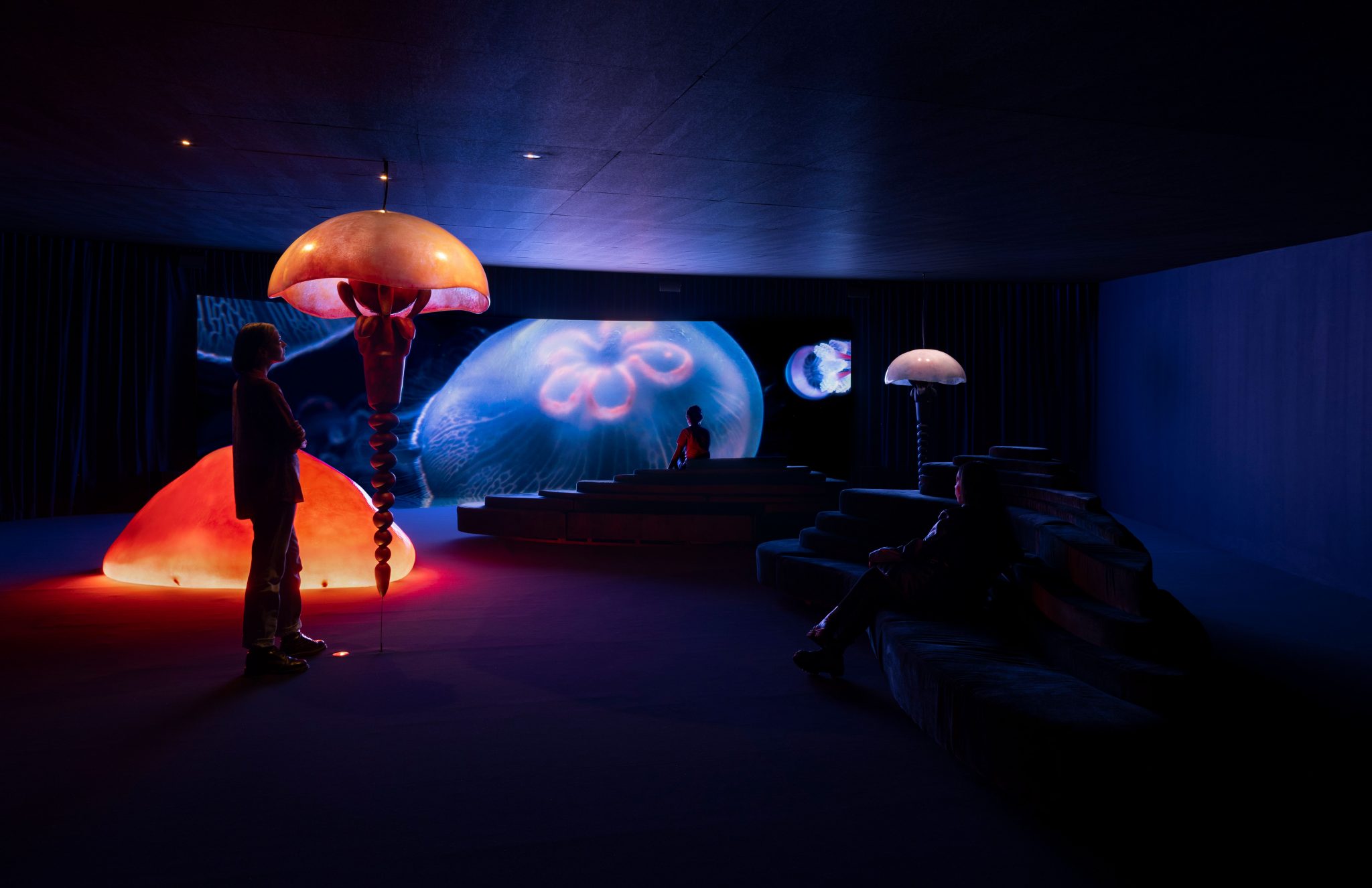
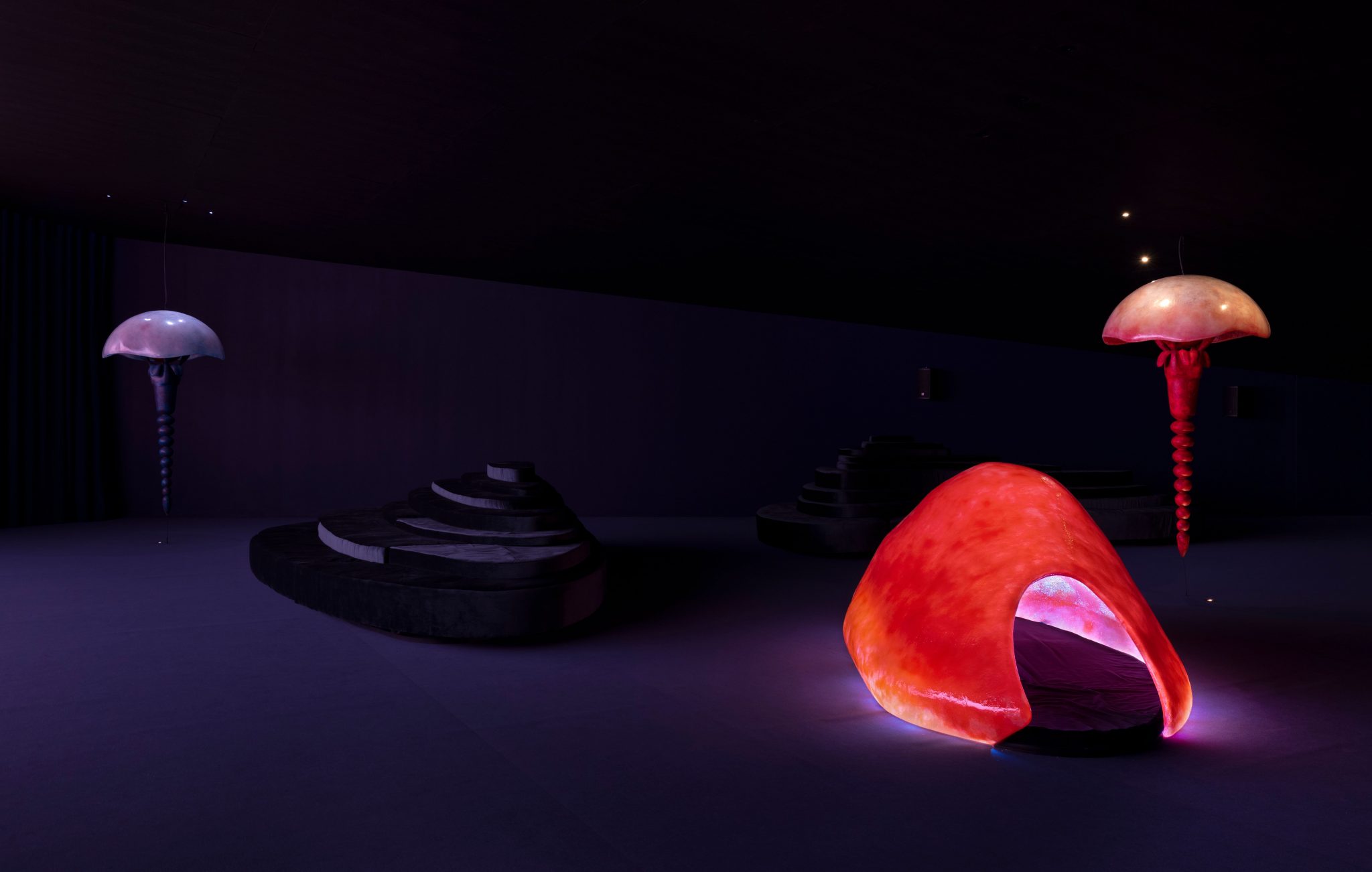
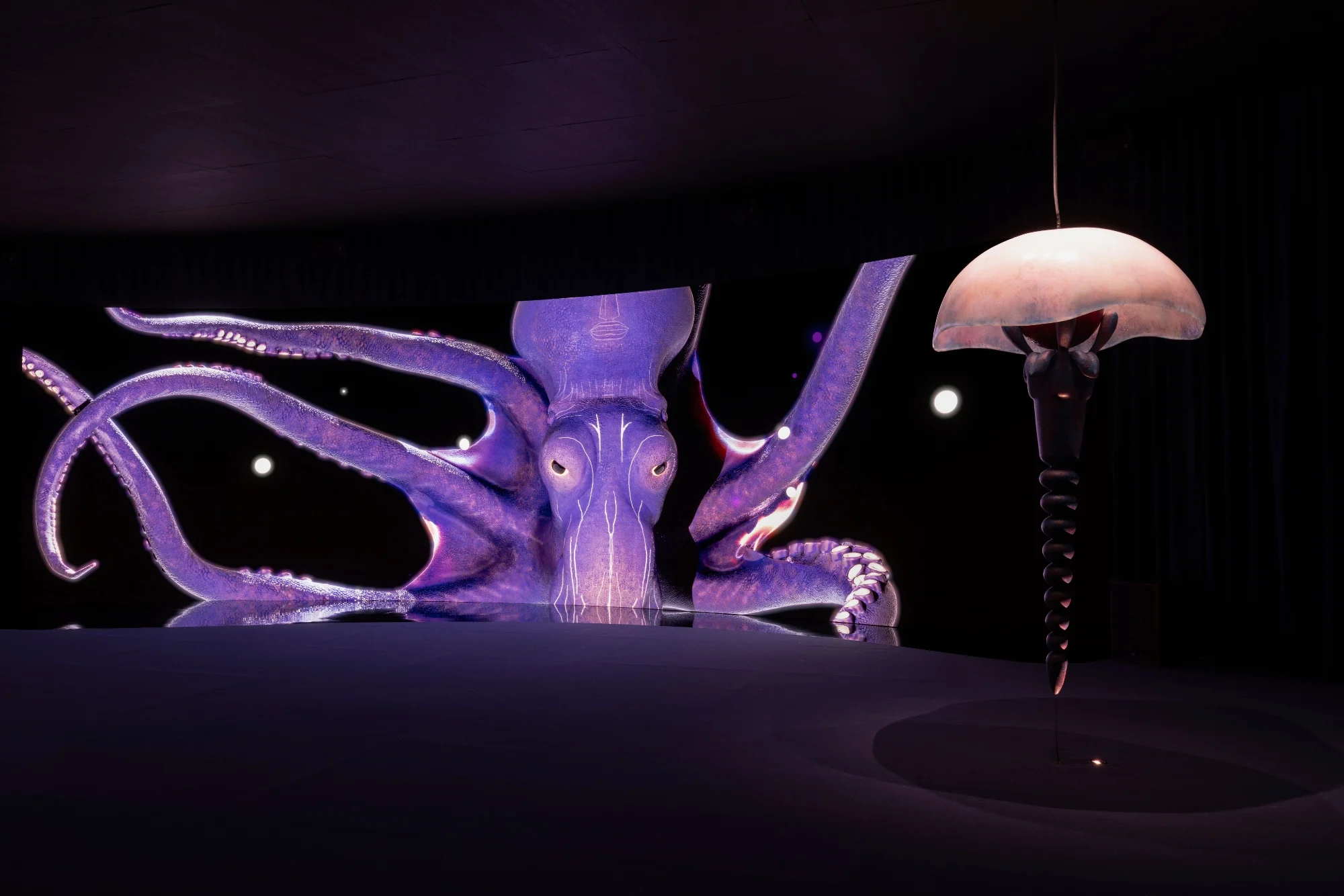
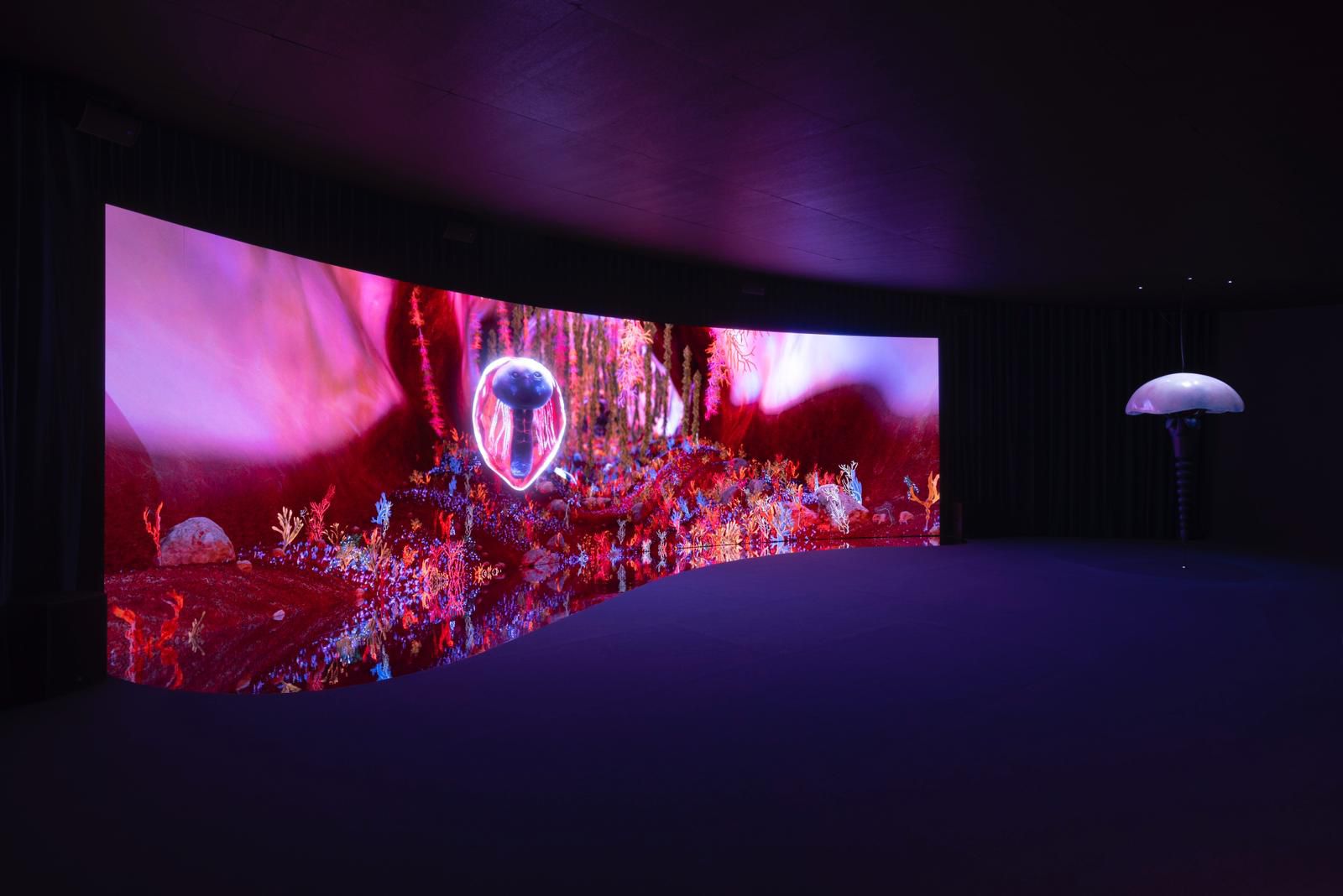
Ntjam’s installation swell of spæc(i)es is an otherworldly environment animated by the cosmic landscapes of a cyclical film and the interplay of sound, voice and vibration diffused from marine-like sculptures. It unfolds a “futuristic ancestrality” — a new creation story shaped by ancient and emergent ways of conceiving the world(s).
The project roots itself in Ntjam’s research into water as a container of many histories and mythologies, from colonial domination and extraction to narratives of emancipation and resistance. She sees these as intertwined, owing to the fact that the geographical spread of many stories implies movement linked to slavery, migration and displacement.
For swell of spæc(i)es, Ntjam explored links between oceans and outer space, both mythologically and scientifically. One point of departure for the project was the recent identification of limestone — a type of rock primarily formed through the sedimentation of the skeletons of plankton and other marine organisms — in the debris of a former planet orbiting a white dwarf. Ntjam keyed in on plankton, an organism defined by its migration on currents, as a speculative point of convergence between Earth and space. Her narrative approaches plankton as an apt carrier of memory across these realms.
In the cyclical film, memories of colonial resistance are embedded within various types of plankton. These hybrid creatures morph between different life phases and processes: they are seen forming radiant stars in reference to a chemical process called bioluminescence, creating shields of mucus and hardening into shells, fossils and limestone. Their transformations become a connecting thread in weaving characters and plot points drawn from Dogon and Huaorani creation stories into an expansive new myth.
To give form to this cosmos, Ntjam used artificial intelligence (AI) image generation and digital blending tools to visually synthesise the vast range of connections she draws. Like myths, generative AI is iterative: it generates endless versions from the same core elements. Ntjam uses the technology to visualise emergent relationships, and to enable figures and stories to continue to transform. For example, she describes the generation of new avatars of West African sculptures as a gesture to “free” these statues from the weight of colonial occupation and theft that often conditioned entry into Western collections. They leap from being an object to a speculative entity, re-entering the realm of myth.
Ntjam’s amalgamation and transformation of disparate stories is aimed at centering possibilities for relation outside of imposed ideas about origin and identity. Her worldbuilding is resolutely alter-futurist. This concept, conceived by Mawena Yehouessi, reclaims the abundance of prospective imaginaries beyond the gaze of Western historical developments, desires and categorisations. Ntjam looks to myth as a powerful way of shaping this futurity. She conceived swell of spæc(i)es as a “non-origin of species.” This idea brushes against both the linearity and classifications often associated with an origin. It invokes endless cycles of transformation and renewal; a snake eating its tail. Surging a “swell” of species, spaces and stories, the project contends with a universe in continual expansion — a creation story without end.”