



Fantasy
Julie Béna
PLATO | Ostrava, CZ
Institutional
23.05.24 - 01.09.24Solo exhibition at PLATO
Ostrava, CZ
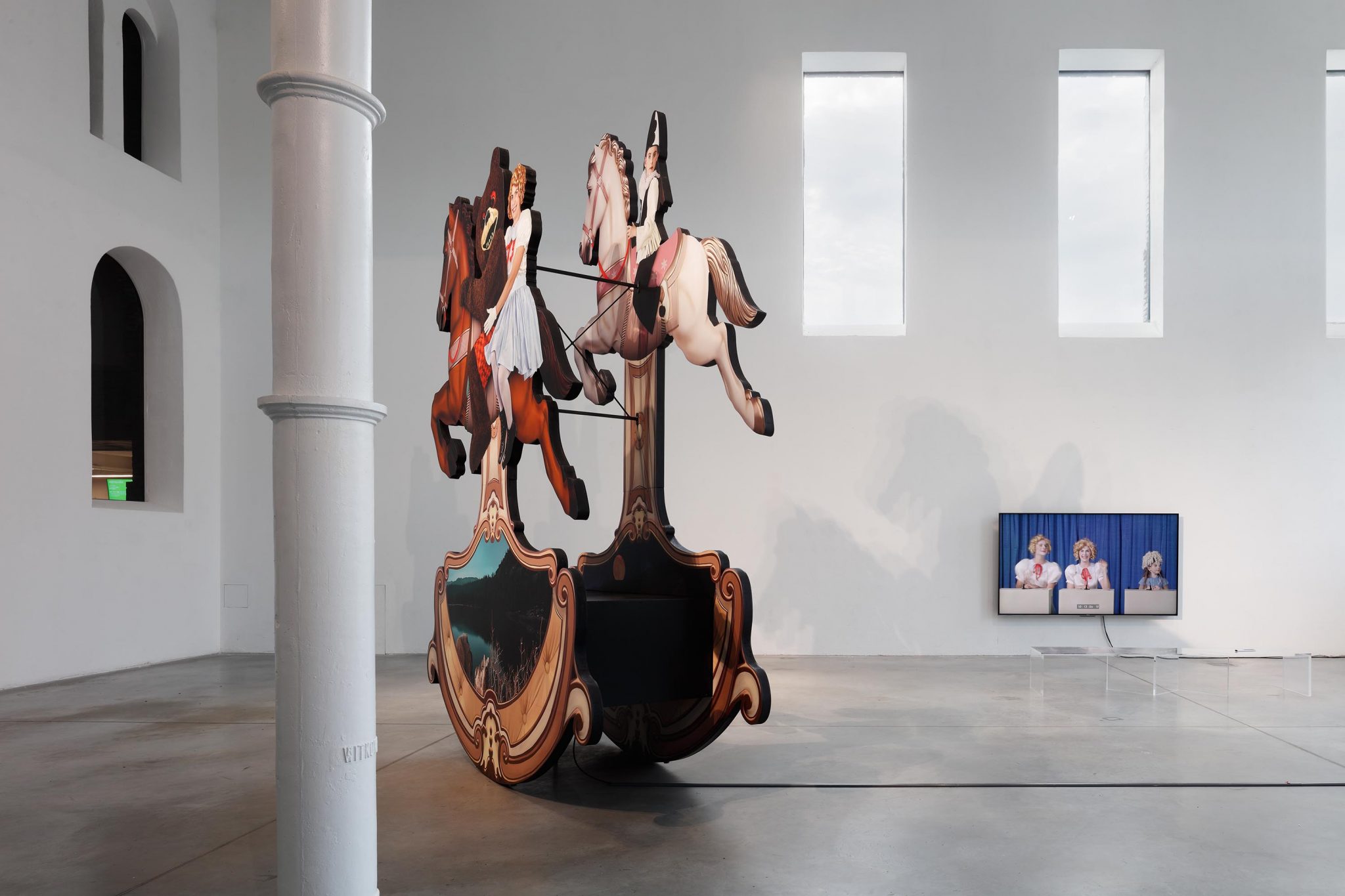
Julie Béna’s Fantasy was the artist’s first solo institutional exhibition—and her first major retrospective—in the Czech Republic.
“In psychology, fantasy is understood as the ability to detach oneself from current or “objective” reality in imagination, to imagine something that does not exist in the “real” world, or rather the results of such a process of detachment. Familiar, visible, existing things and images are variously combined, transformed or placed in new contexts. Something new, unreal, foreign, but in a way familiar is created. Fantasy is a means that allows us to communicate and share important things that we (not only) hide from ourselves; things that we do not like to talk about directly.
As a unique type of emancipation of subjects and as a liberating reaction to their entanglement in social and intersubjective relations or as a defensive reaction to the mental and psychological setting of a particular person (or group of people), fantasy sometimes has a great, sometimes somewhat tarnished reputation. The debate is always not only about the degree of feedback that such detachment has on reality, from which subjects and specific groups of people emancipate themselves through fantasy. There is also an absolutely fundamental question whether fantasy is not simply an escape stemming from the inability or unwillingness to face reality. At the most basic level, it may be a purely self-preservation reaction, but its productive nature (and therefore the most important thing that fantasy provides to the subject) always leads to a kind of positive projection, such as the creation of a parallel world or story and the construction of an alternative. Seemingly powerless or reality-subordinate subjects can at least mentally overcome or transcend given conditions through fantasy. By radically reworking and re-connecting or depicting fragments of reality in a dissimilar way, fantasy opens up the possibility of free action in relation to reality, which by its very nature excludes such a thing. Reality is apodictic, fantasy is critical.
Psychoanalysis, where the concept of fantasy was the subject of heated debates at one time, especially between rigid supporters of Sigmund Freud and defenders of Melanie Klein’s concept, distinguishes between unconscious and conscious fantasies in one way or another. In various approaches, it fluctuates between the concept of fantasy as a distinct psychic process and fantasies as contents of the mind. The issues of suppression of originally conscious fantasies and the attempt to interpret them, or the existence of originally unconscious fantasies and their nature, are not important for us now. Let us rather keep in mind the fact that in the course of psychoanalysis, access to unconscious fantasies is a common construct of the patient and the psychoanalyst. This creates a common space of the psychoanalytic field within which fantasies can be analyzed and interpreted.
The usual idea that fantasy is something unanchored and boundless, or entirely and only individual or non-transferable, is therefore not entirely correct. It is difficult to mobilize fantasy processes without support in experience, experience or volatile memory. Fantasy cannot do without points of reference, sensory or figuratively completely specific, without a starting point, or better said without limitations and resistance. It is also intersubjective and specifically discursive, one could even say constructive, and it is accessible to understanding.
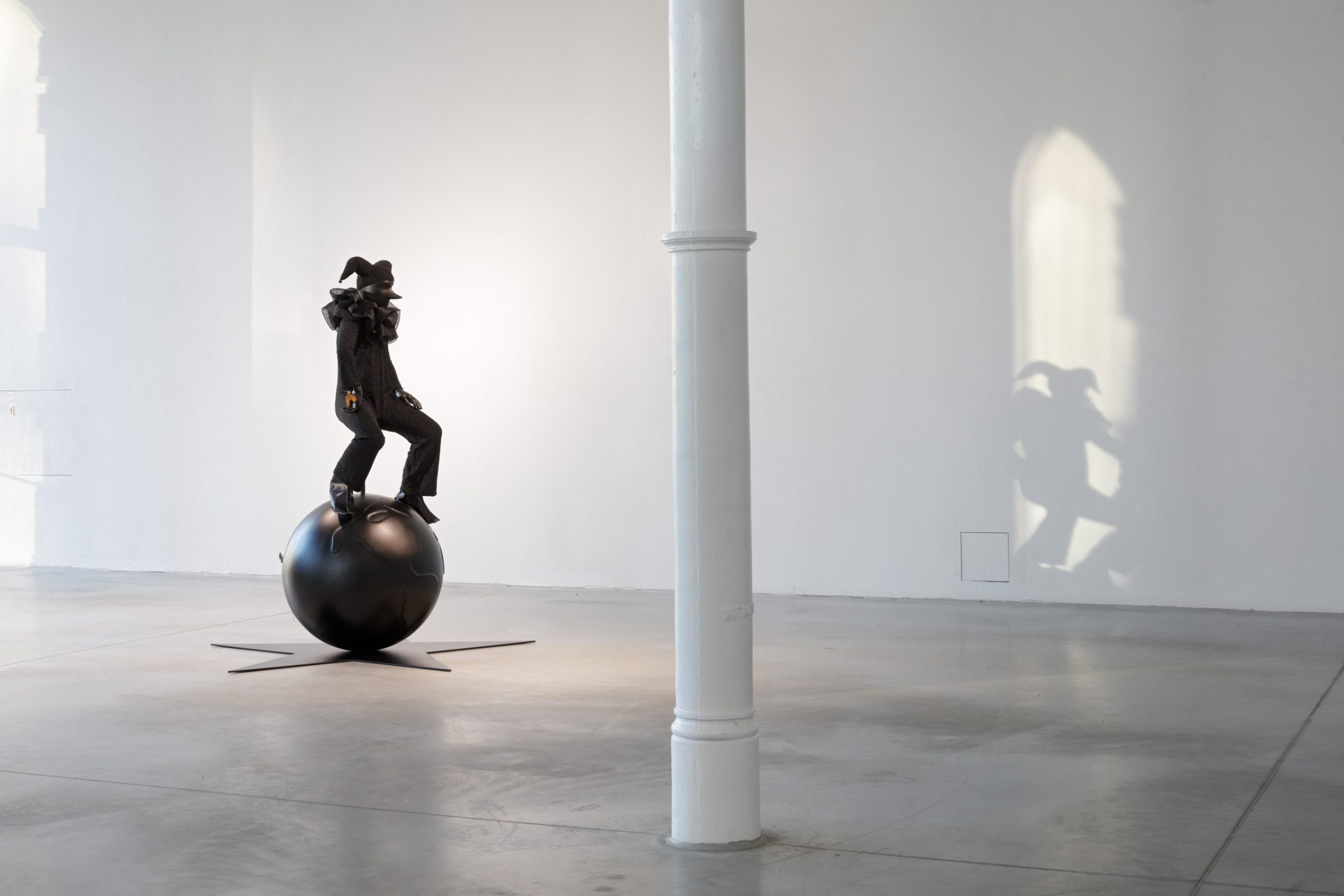
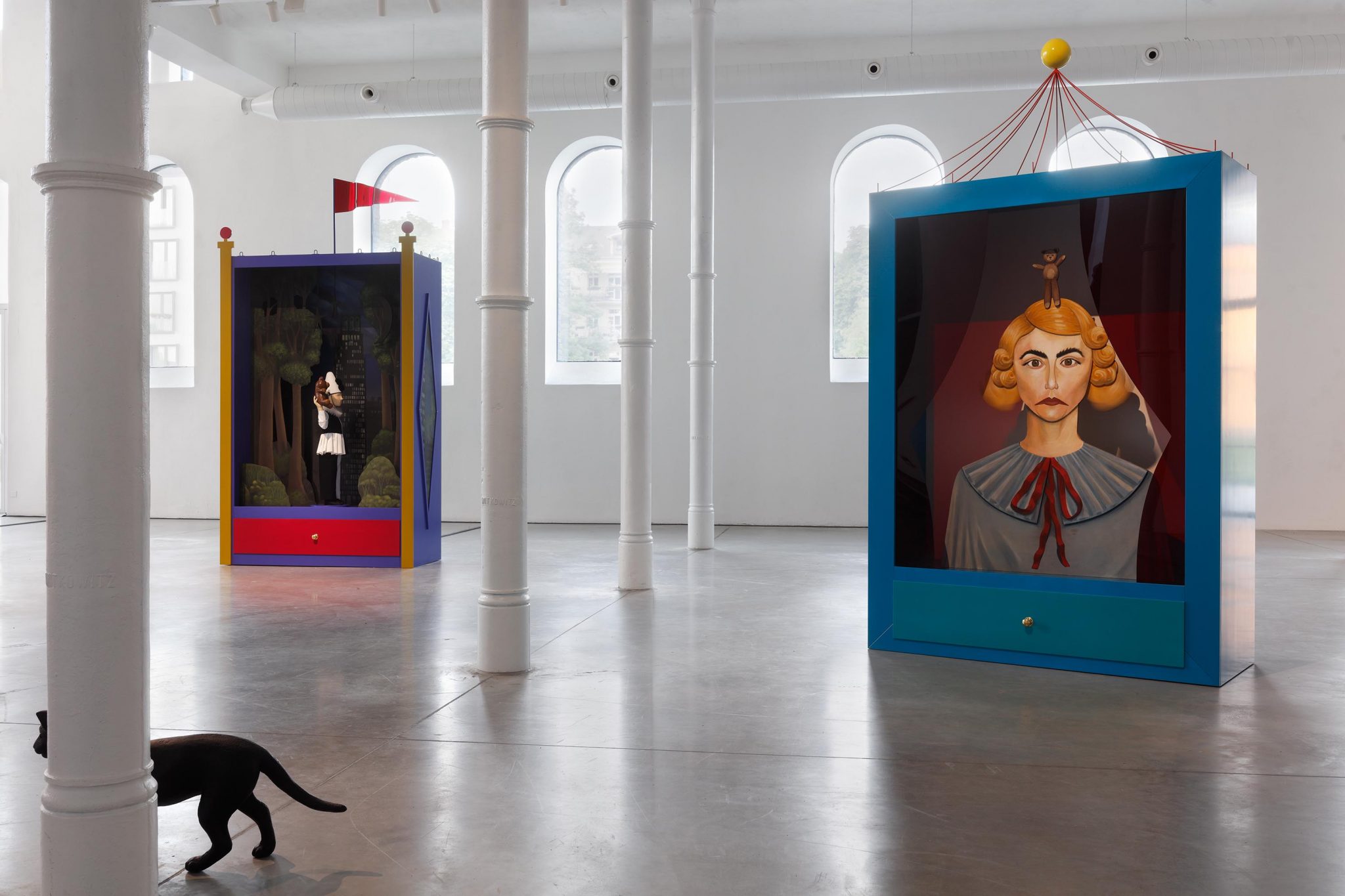
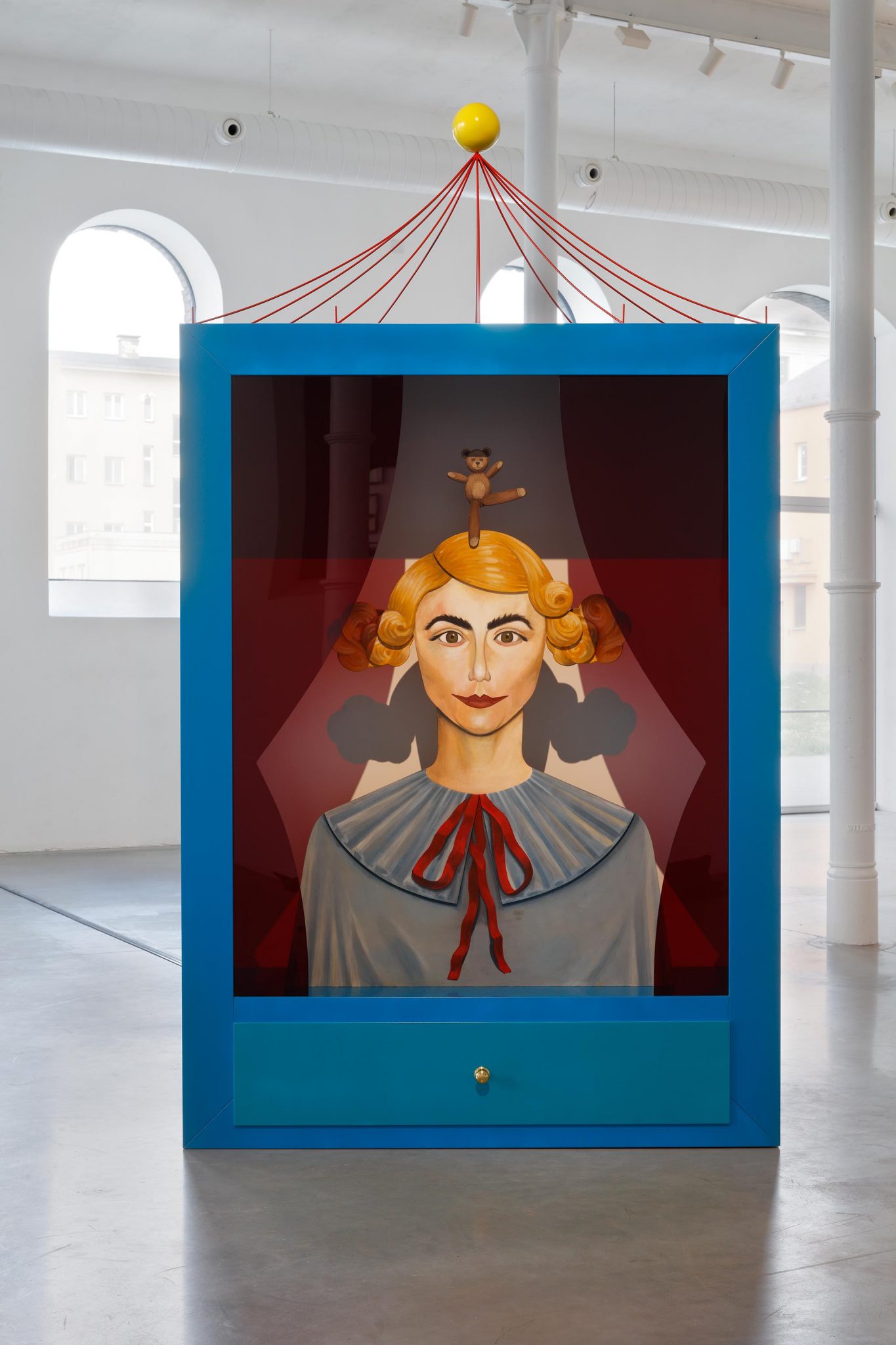
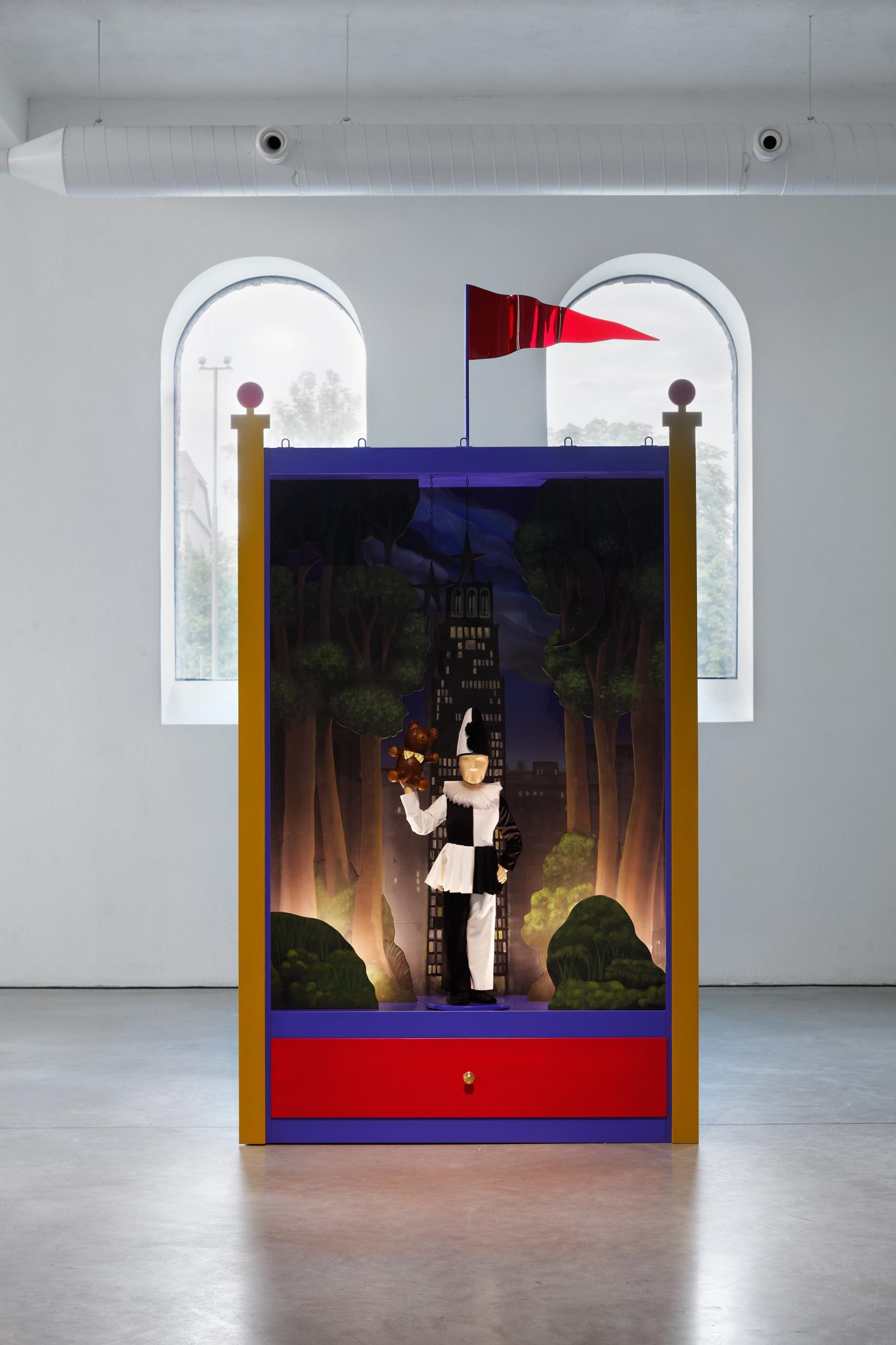
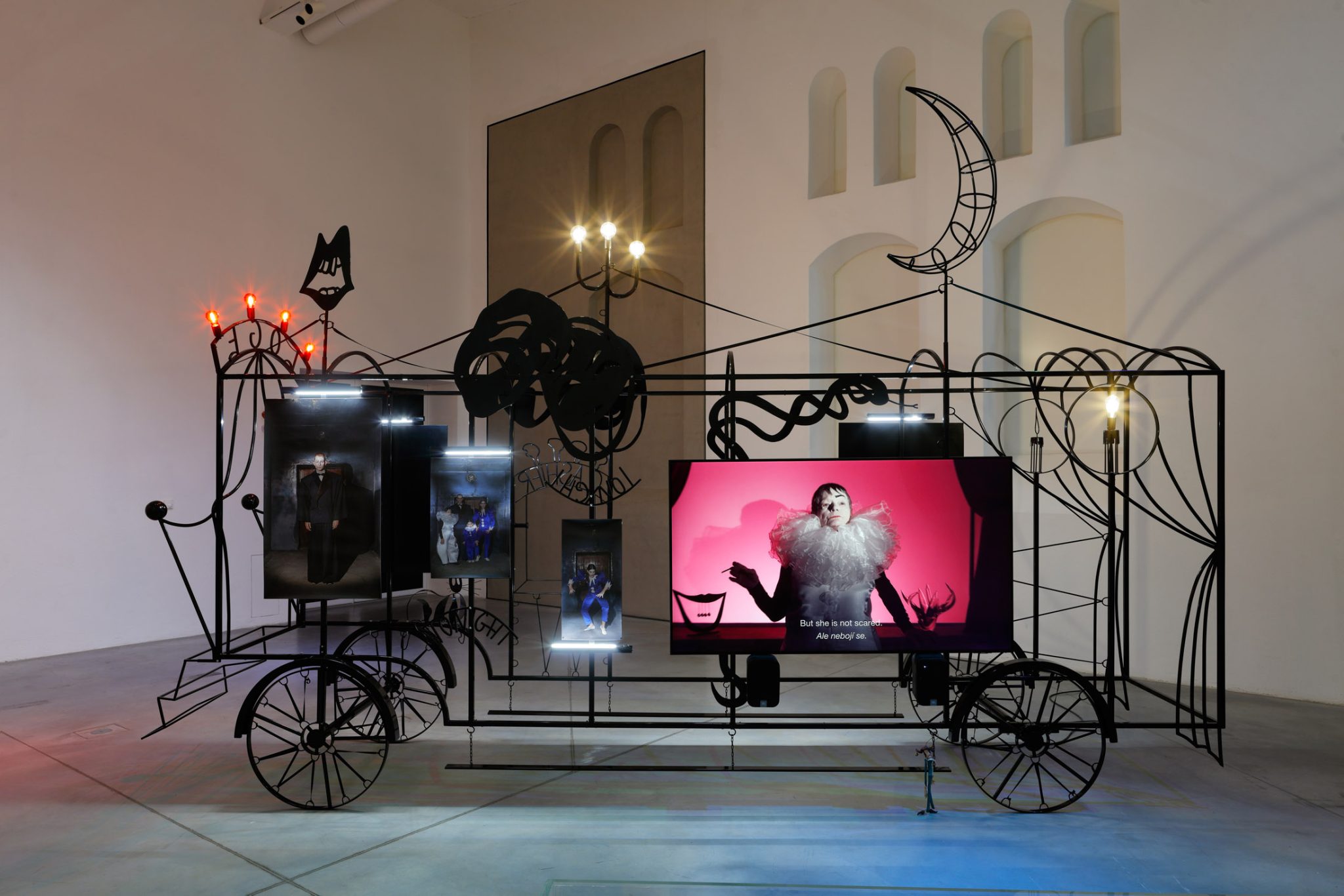
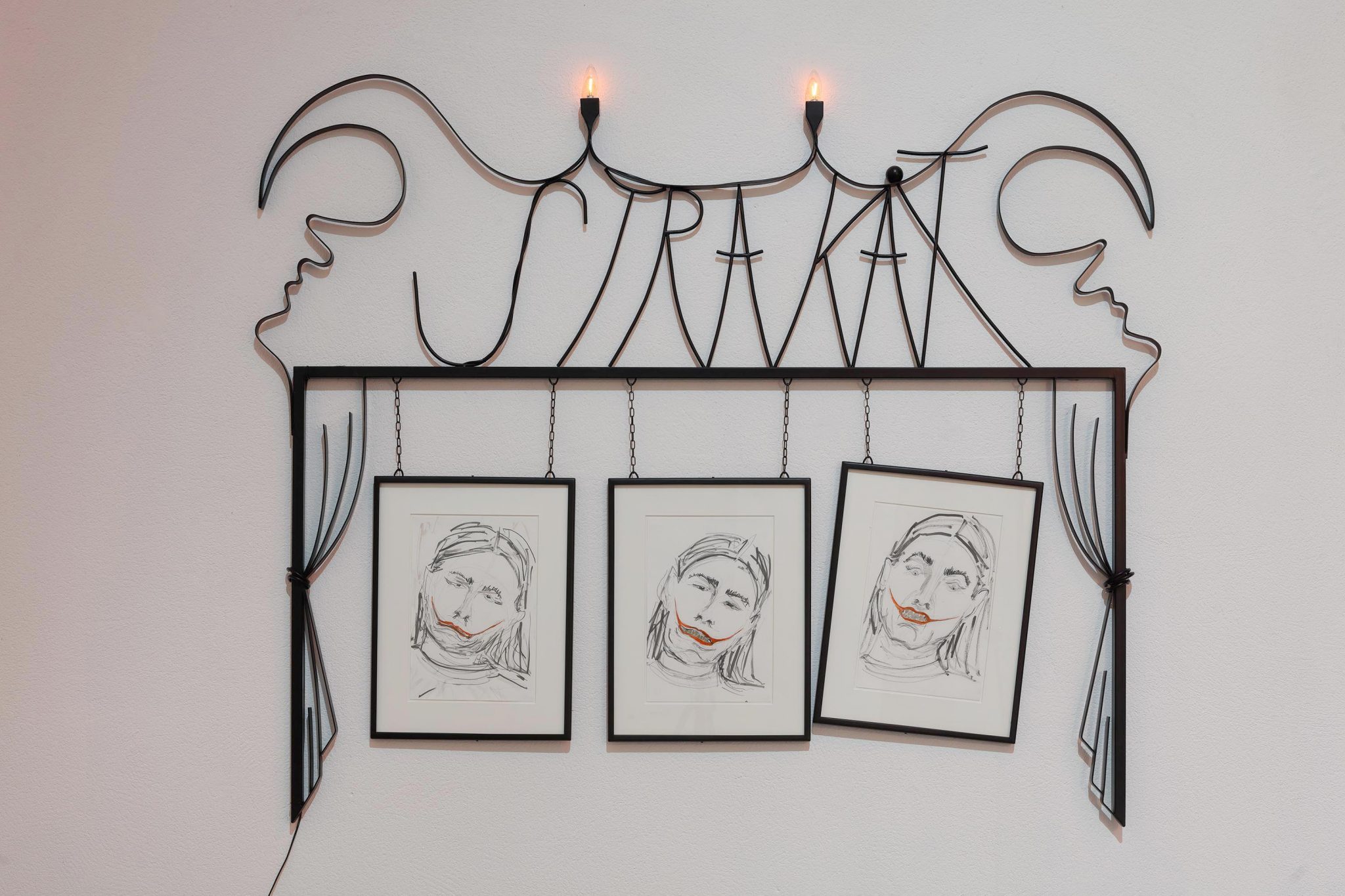
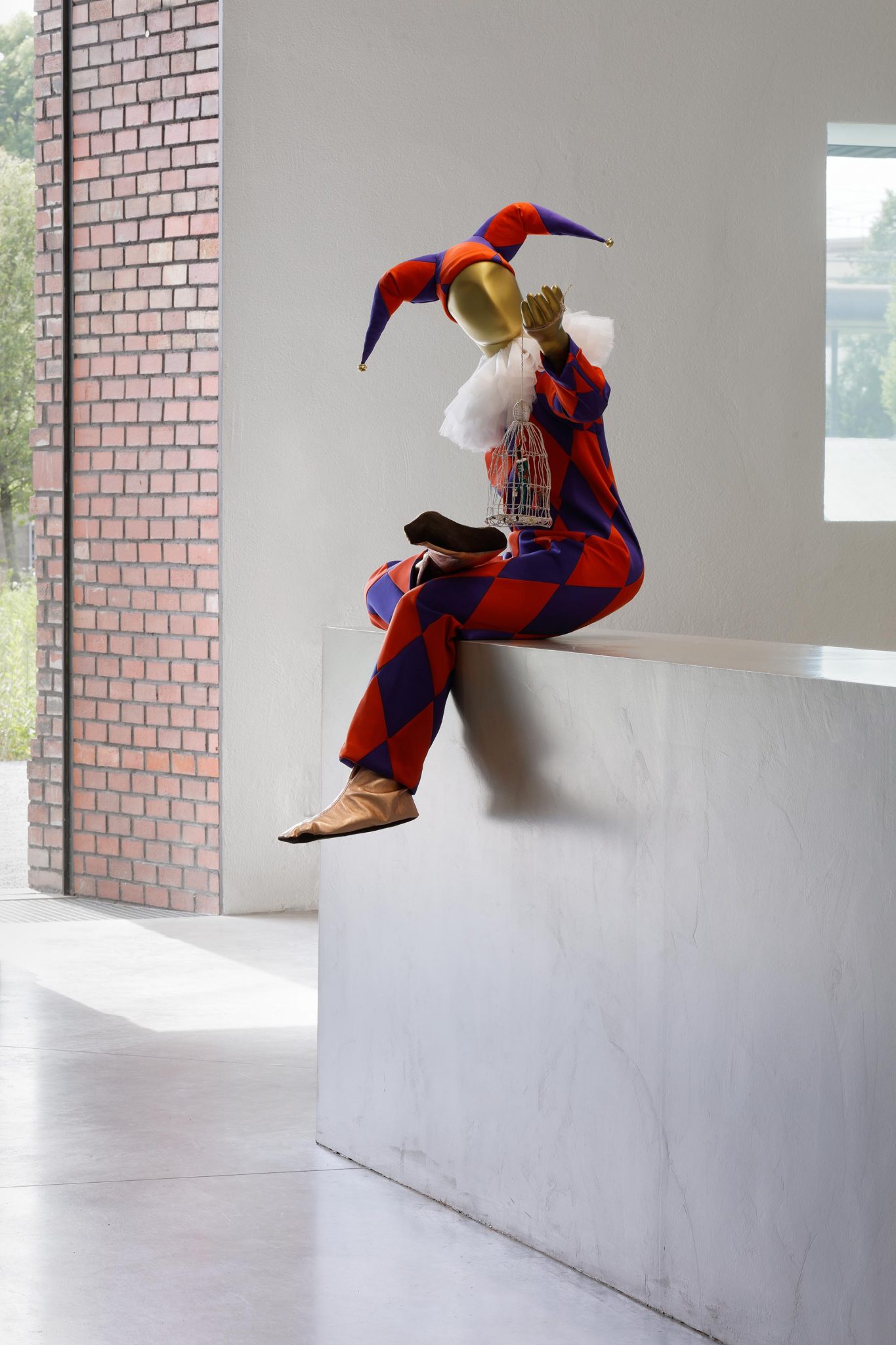
Julie Béna is well acquainted with the environment of the traveling theater, with which she traveled and performed as the daughter of an actress. In her work, she has long drawn not only from this experience, but also from the traditions and imagery of cabaret and fairy tales, which in their heyday expressed themselves through irony and exaggeration of politically sensitive topics and the repressive nature of social or political reality. However, her artistic strategy is also based on the subversion of associations connected with the world of theater, cabaret and fairy tales, which we conventionally consider to be the exclusive territory of fantasy. The basic condition for the possibility of experiencing theater performances and cabaret performances or letting ourselves be carried away by them is our ability to think beyond the entire apparatus and a series of tacitly accepted procedures. Only in this way do they become a space and environment of “unfettered” fantasy. Despite all the experiments aimed at abolishing the thin line separating actor and spectator, stage and backstage, we always either accept its existence or are at least able to perceive it at least in parentheses. We approach the formalized or prefabricated elements on which any performance and our experience are based with special trust. The fairy tale is similar. Cabaret then, as a principle, switches, deconstructs and reflects on these formal aspects in order to maximize its effect. In all cases, fantasy is thus in a way trapped and enclosed in the specific aleatoric nature of the expressive and “operational” characteristics of a given art form or genre, as their denial or overcoming. Its freedom can only manifest itself through dependence on a certain discourse or rules.
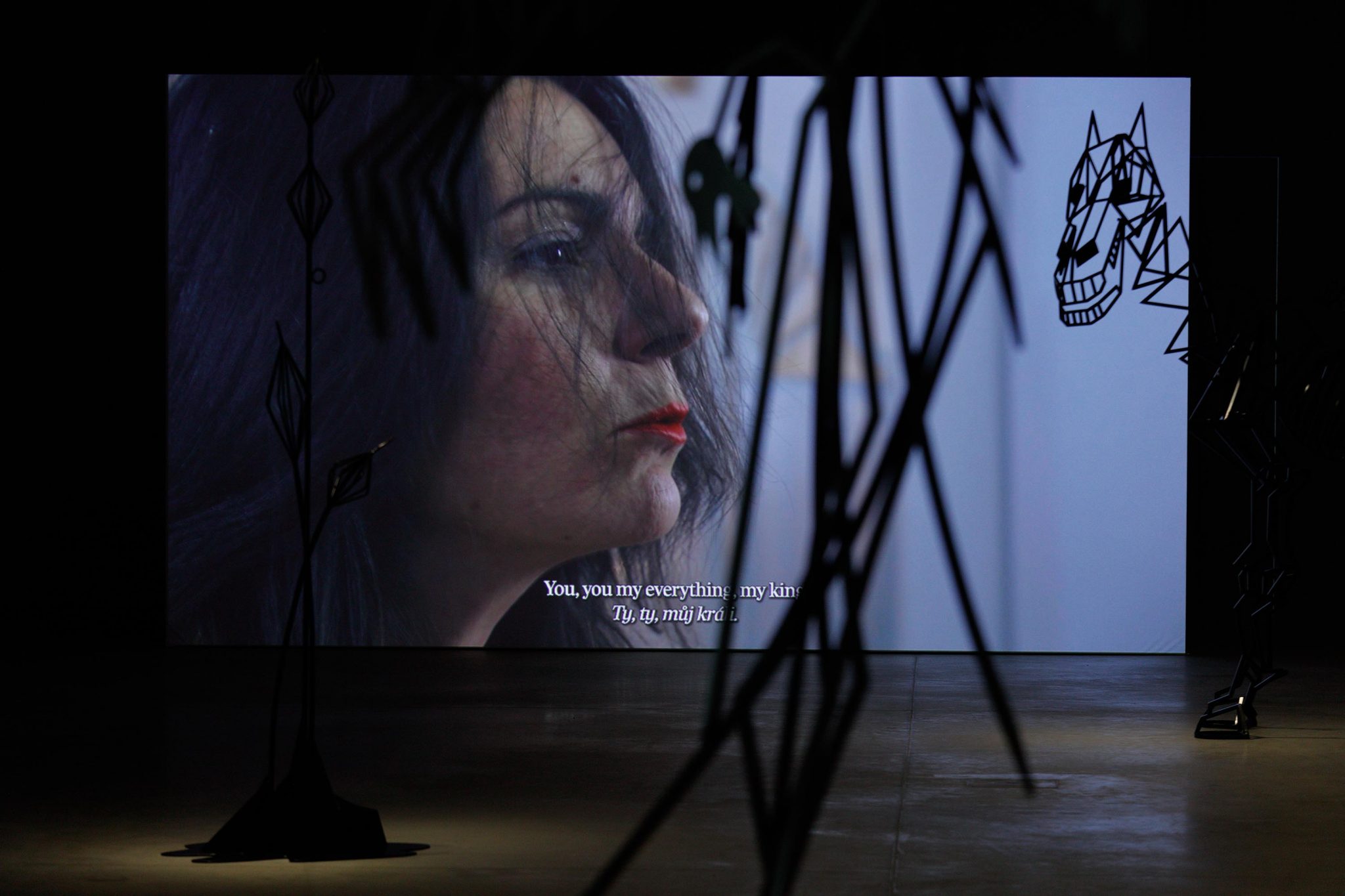
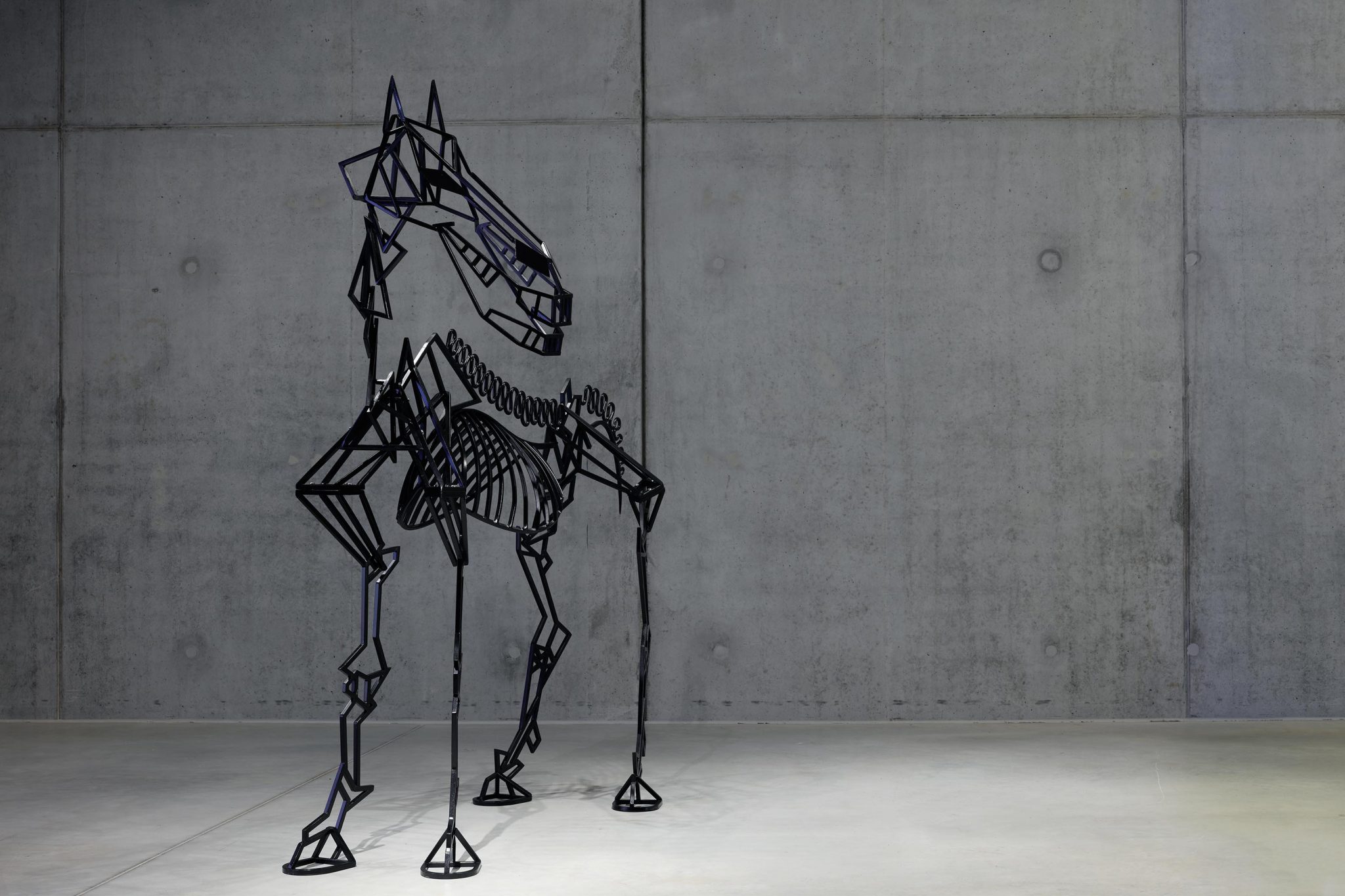
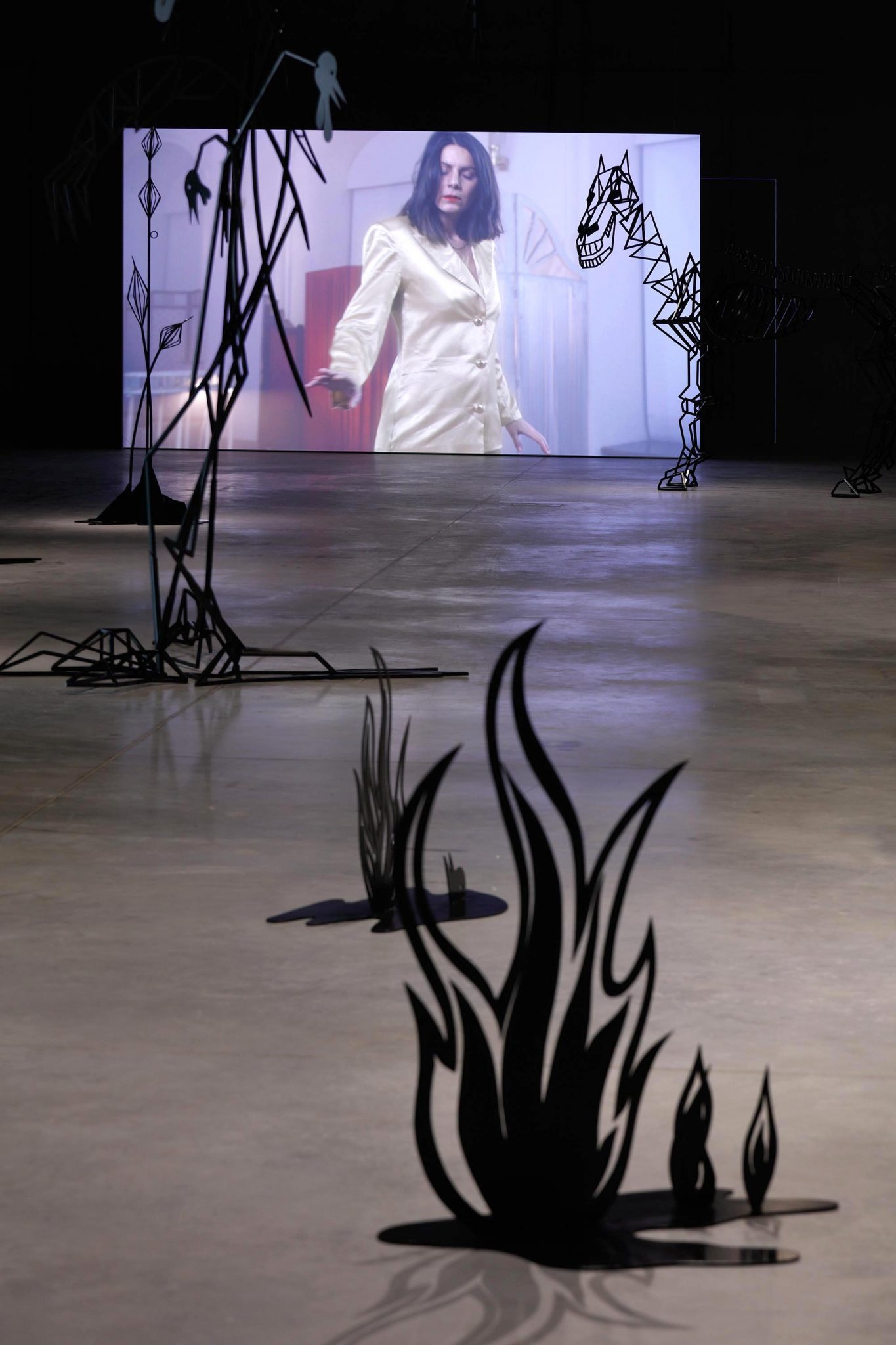
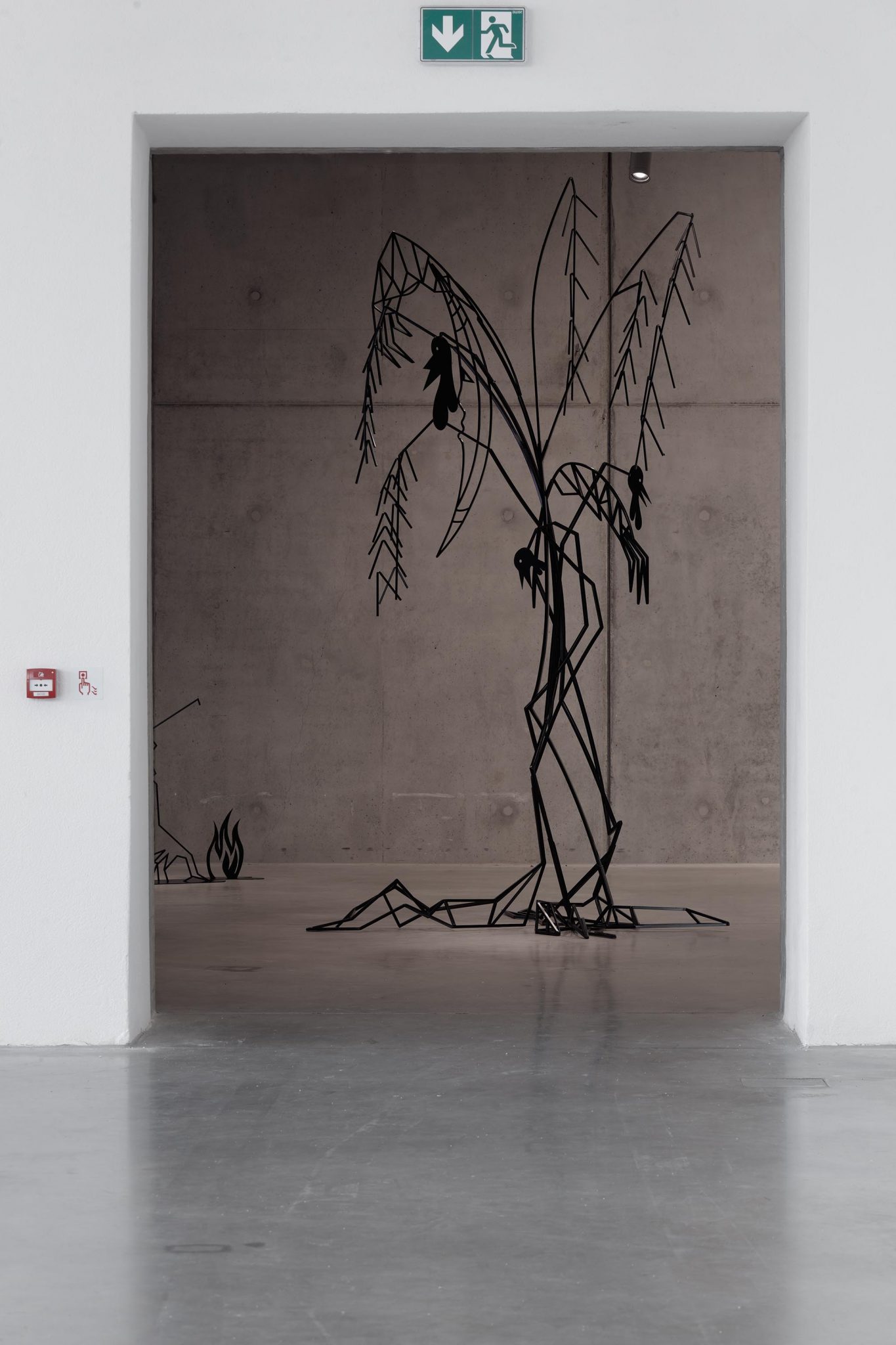
Julia Béna is also fascinated by the vast storehouse of canonical, generalized ideas, characters and plots in Western civilization, without which we cannot imagine a classic drama or a great novel. Another important source for her is film or pop culture with its ability to mirror, exaggerate and exacerbate basic social conflicts and desires through surprising abbreviations. This means a turn to content embodied by specific or typical characters, gestures, plots, images or “gags”. The personal is always co-determined by a cultural formula or pattern. A series of metal sculptures creating in various constellations the image of an exhausted, arid landscape from our fantasies about the Wild West. From one construction principle of welded objects, the artist unfolds a complex pictorial and semantic layer of fantasy transformations. Classic black and white cowgirls permeate images from animated films about Lucky Luke or hallucinatory images from the post-apocalyptic quasi-western series Westworld, contaminated by the memory of the emaciated mare Rosinante from Don Quixote.
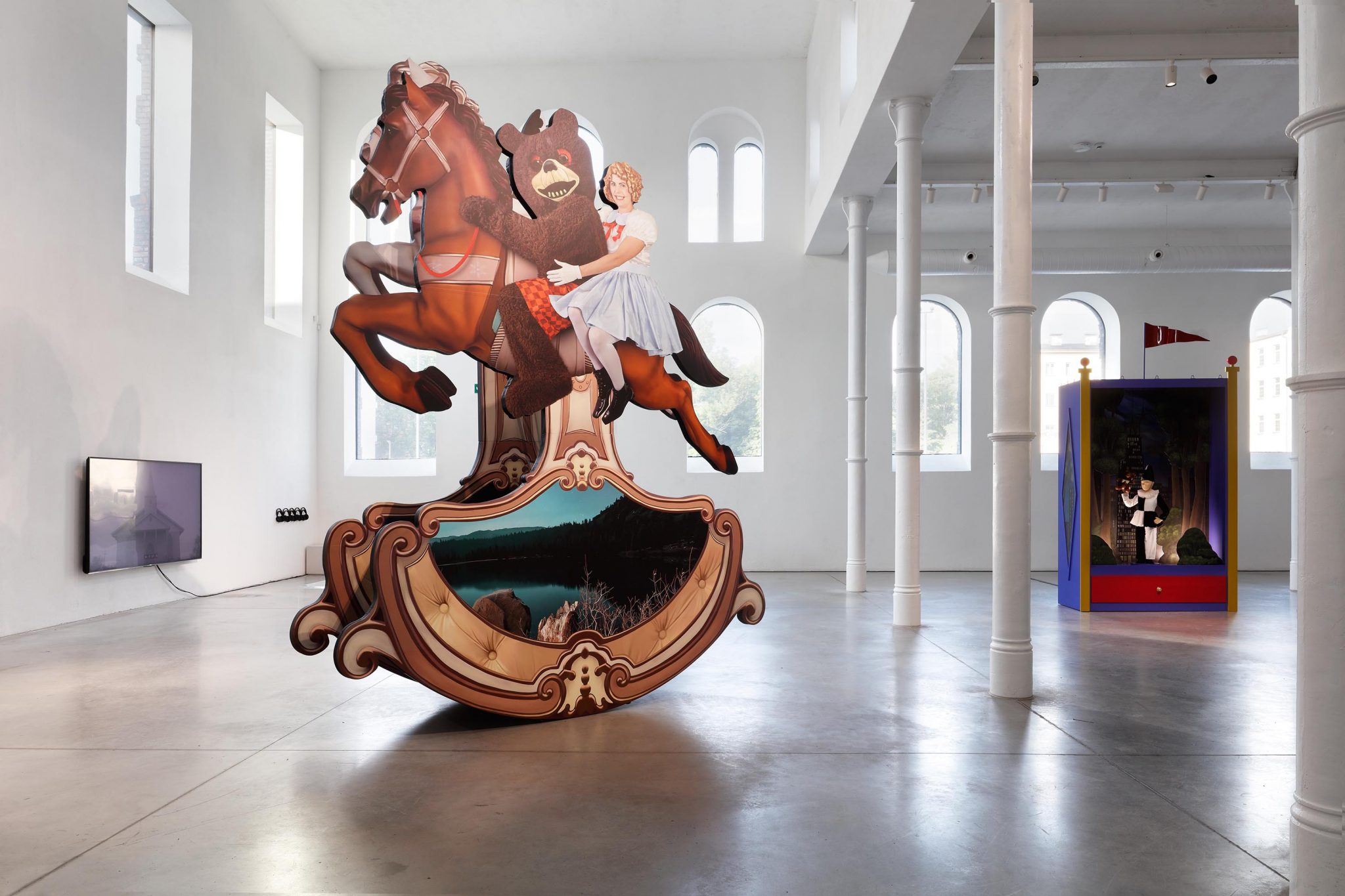
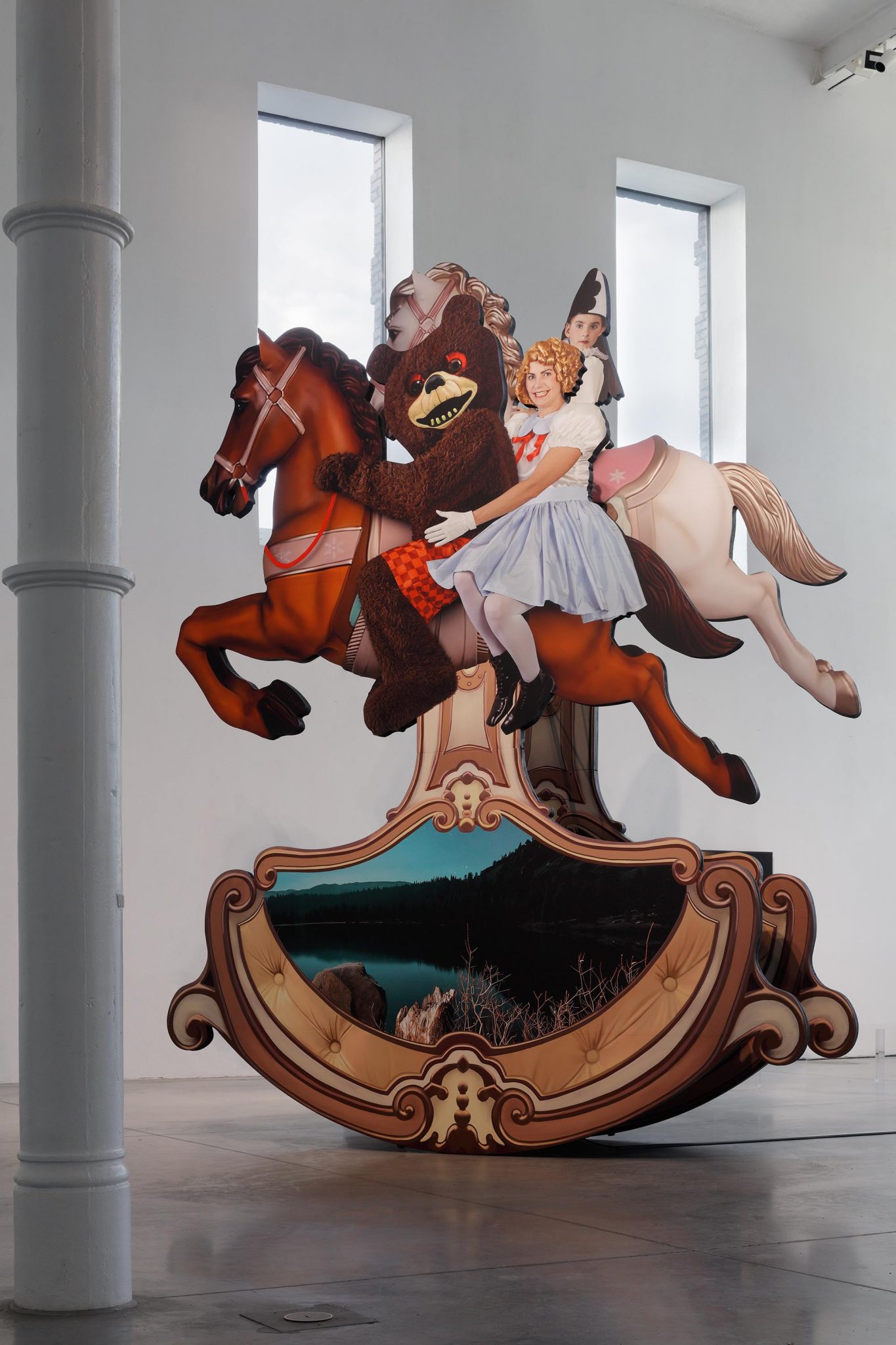
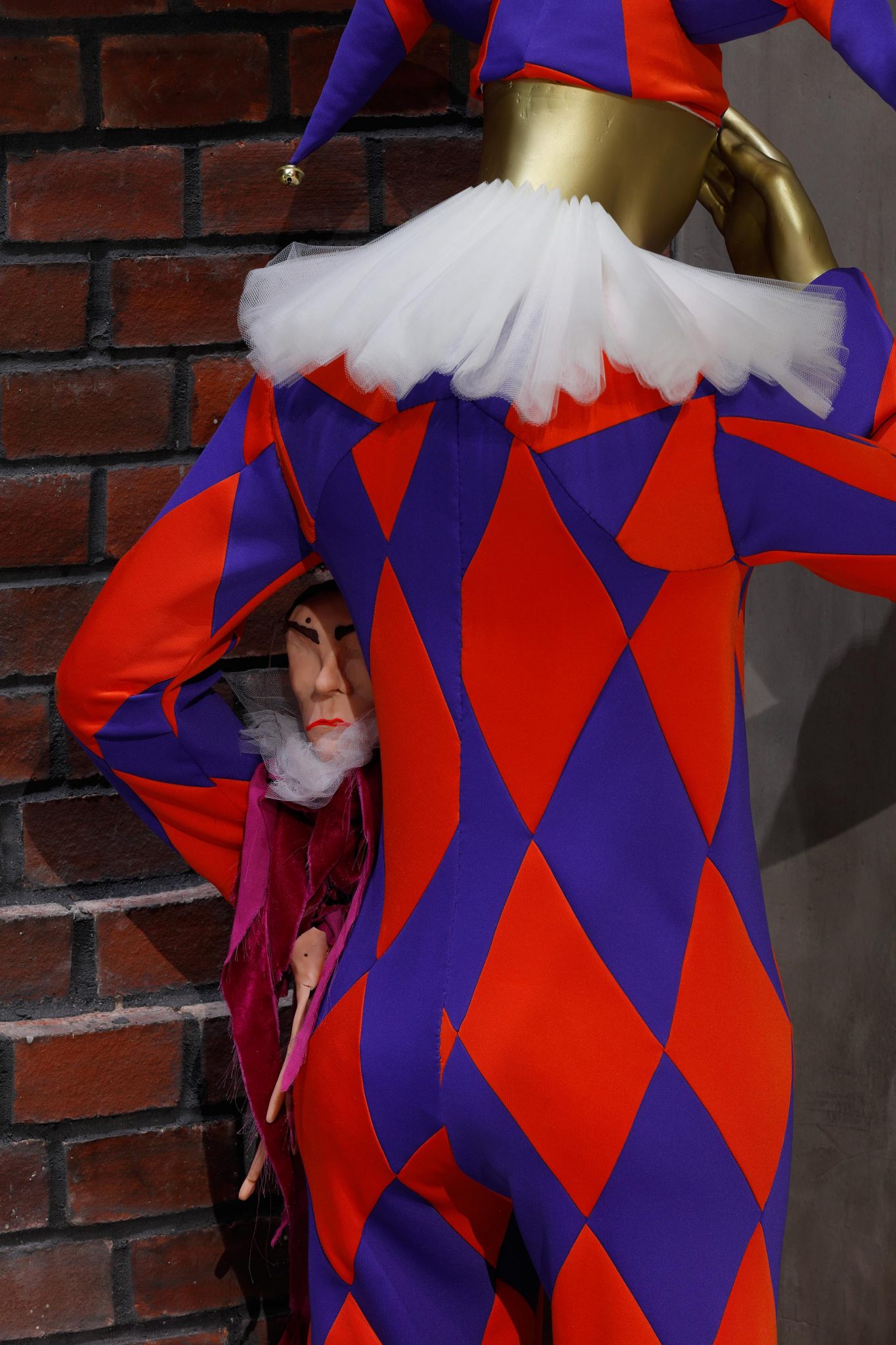
References to prototypes are interpretatively rich, but it would be foolish to build on them. We cannot do without them anyway. It is perhaps more far-sighted and effective to accept the prototype in its impersonality or factuality and to use its characteristic features to the maximum. The will to stretch these characteristic features until they almost begin to fall apart is essential. Such is, after all, the basic choice of the artist, who approaches her personal history and mythology strategically in order to gain as much space as possible for fantasy. In the world of commedia dell’arte, pantomime, cabaret and circus, in the world of fairy tales, but also animated films, blockbusters and computer games, characters are portrayed with clear strokes – so that they are recognizable at first glance. Their character does not develop, they represent distinct attitudes, moods and fate. They go through the story in one costume. We know what to expect from them. They act in such a way that we follow the plot, the situational joke, the execution. We don’t worry about where they came from. Their uniqueness is disturbing in itself. But what if their toe sticks out of their sock when they should be perfectly elegant?
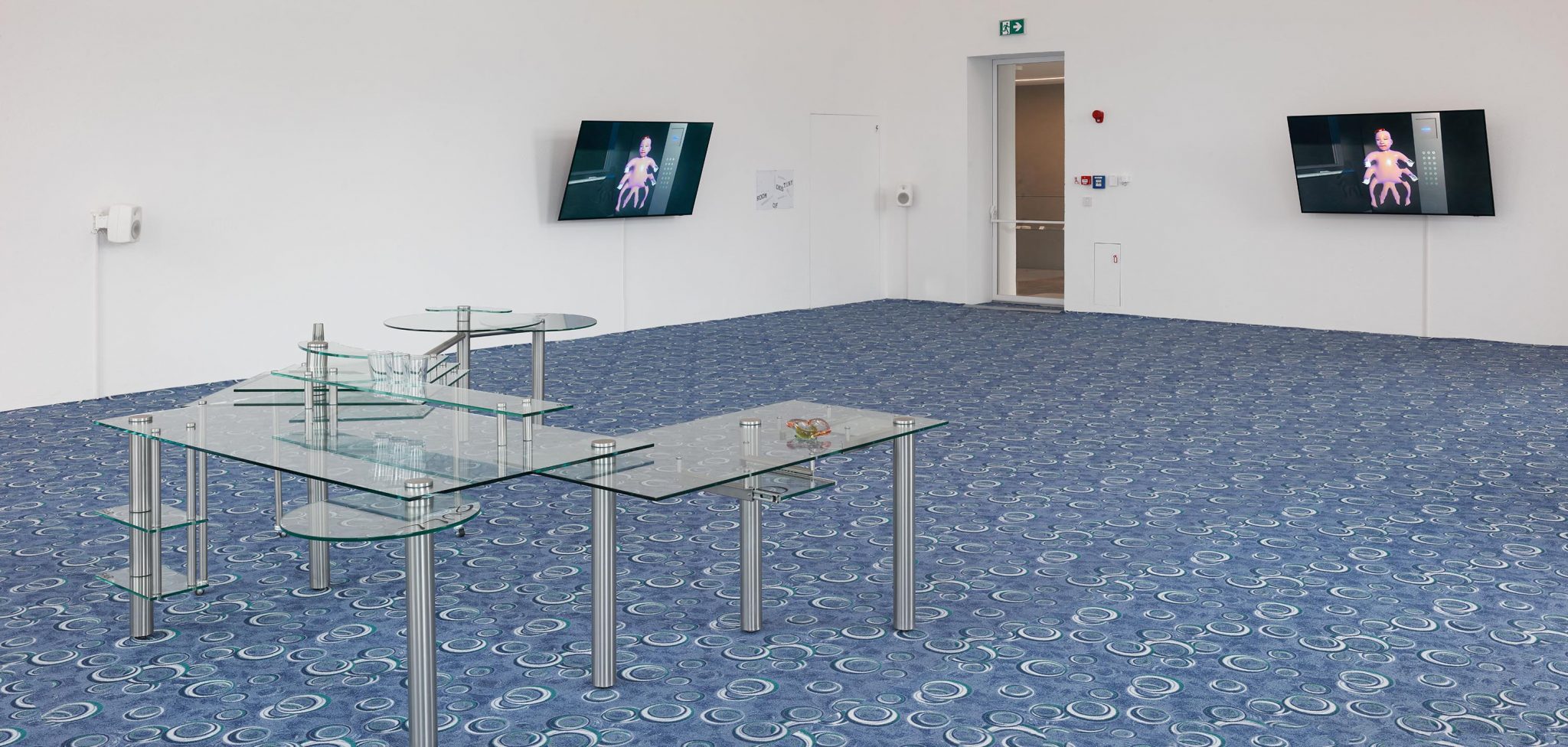
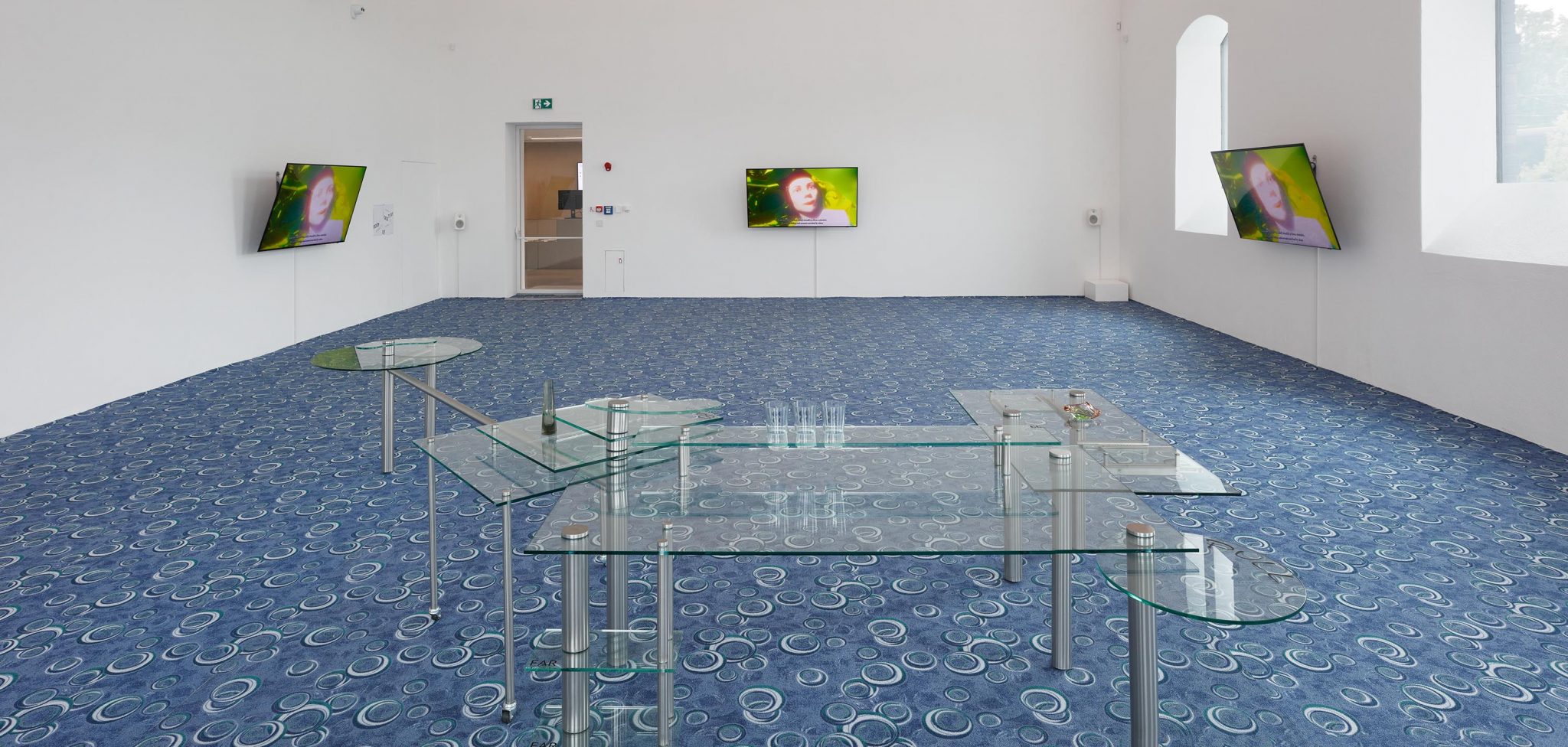
The poetics of emancipation in Julie Béna’s work understands the characters and their prototypes in the context of their former critical function, when the artificial fairy tale or cabaret was a space for radical questioning of the social order. At other times, as in the case of the actress Shirley Temple, who merged with a certain type of character and this in turn with her roles in her political career, she reveals and questions the mechanisms that instill in us socially conformist ideas about the roles assigned to individuals. A similar tactic is the creation of one’s own avatar for some animated videos, the performance of oneself and one’s loved ones in costumes referring to commedia dell’arte and circus in other films of the author. The paradox of the blending and dissociation of person and role intensifies the message. When I asked about some important texts or works of art that were of fundamental importance to the artist, we came to Jean Anouilh’s drama Antigone. Five-year-old Julie Béna played Creon’s page in it. The prologue, which she drew my attention to in an interview, can be understood as a kind of source code for one of the artist’s basic creative principles. In it, Anouilh suggestively introduces the individual characters, in such a way that the text very subtly expresses the distinctions between roles, the physical presence of the actors, and the choices that the actors of the drama are faced with. Through rhetorical figures that weave the individual characters of the drama, the prologue skillfully weaves a trap of transparency in which our own fantasies also speak to us. Transparency is as much a hand offered for sharing as a principle of power, the power of which modern architecture has well understood. Its ambivalent effects are testified by the glass table, a work that has appeared in different contexts and in the artist’s previous exhibitions. The work, which seemingly deviates from the narrative, figurative whole of Julie Béna’s work, reflects her former desire to become an architect. The critical legacy of this “career fantasy” seems to be the contrast between dysfunctional functionality and the evocation of a missing human presence.
The world of Julia Béna is highly personal, but also shared through generally understandable prefigurations. It is composed of images that come from different sources and traditions, but have stuck in our collective memory. These images form a vocabulary with which the artist expresses in a new and imaginative way the questions or dilemmas of emancipation, gender repression and the social roles that we occupy in our lives. Among other things, the conflict of roles of artist, mother, daughter, wife…”
Text by Marek Pokorny