Patent 3306x
Appau Jnr Boakye-Yiadom
Gallery
11.07.26 - 05.09.26NıCOLETTı is pleased to present Patent 3306x, a solo exhibition by London-based artist Appau Jnr Boakye-Yiadom (b. 1984), opening on Saturday 11 July (4–7 pm) as part of the official programme of Backyard Biennial: East, an 8-week summer arts festival initiated by Whitechapel Gallery in collaboration with more than 40 local partners across East London (14 July – 6 September 2026).
Patent 3306x follows Boakye-Yiadom’s three-year research as the inaugural recipient of the Donna Lynas Residency (2023–26), a partnership between Wysing Arts Centre, Modern Art Oxford, Somerset House and South London Gallery. During the residency, the artist developed a series of exhibitions informed by his study of musical instruments in the Bate Collection at Oxford University and the Pitt Rivers Museum, Oxford. Its final chapter, Modular Merger, is currently on view at Modern Art Oxford until 13 September 2026.
Working across installation, painting, video and photography, Boakye-Yiadom examines the systems through which objects, images and knowledge are classified, circulated and assigned value. Drawing from natural history, popular music, fashion and everyday technologies, his practice reveals categorisation not as a neutral act of description but as a cultural mechanism through which ownership, desire and authority are continually negotiated.
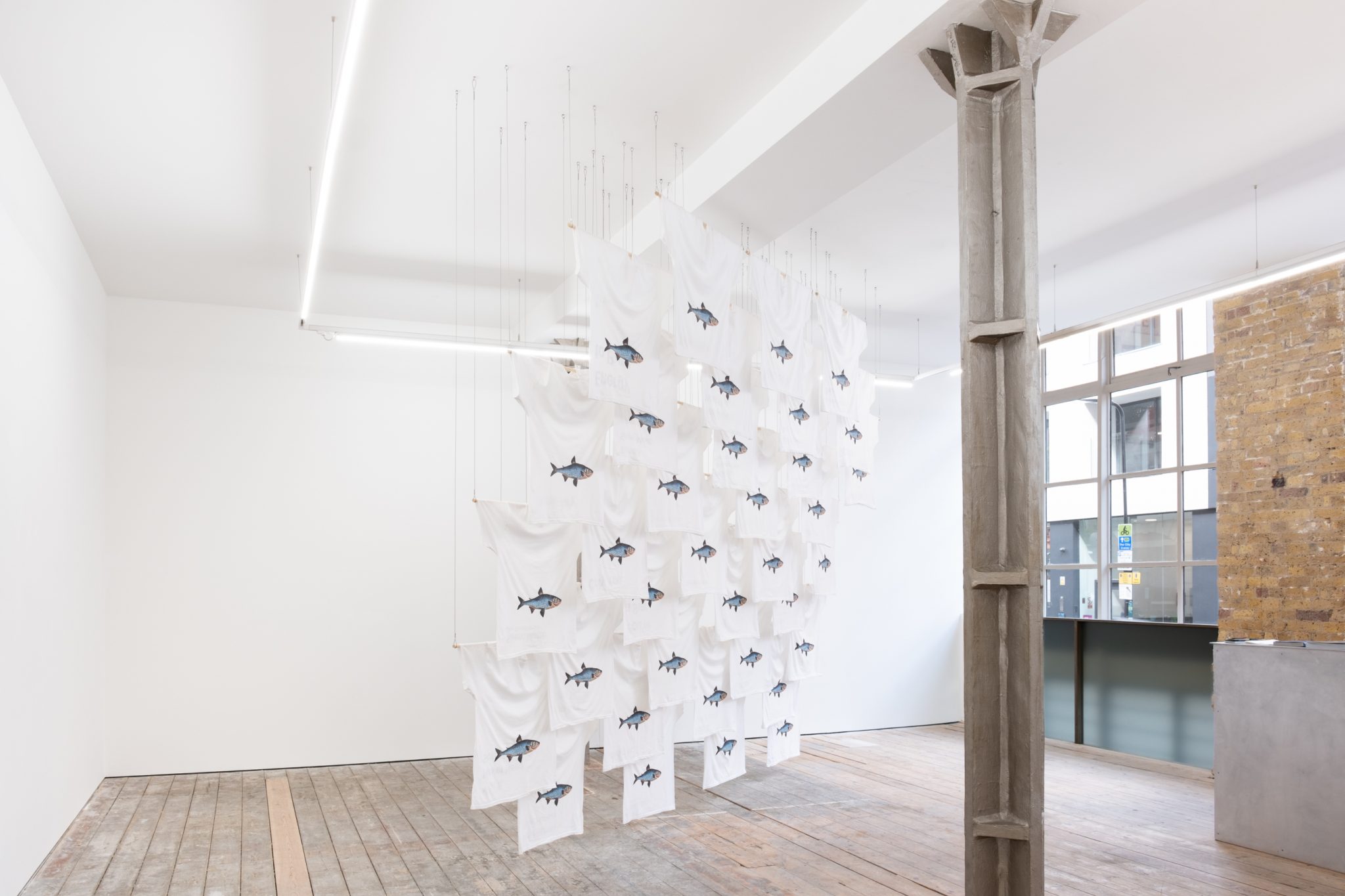
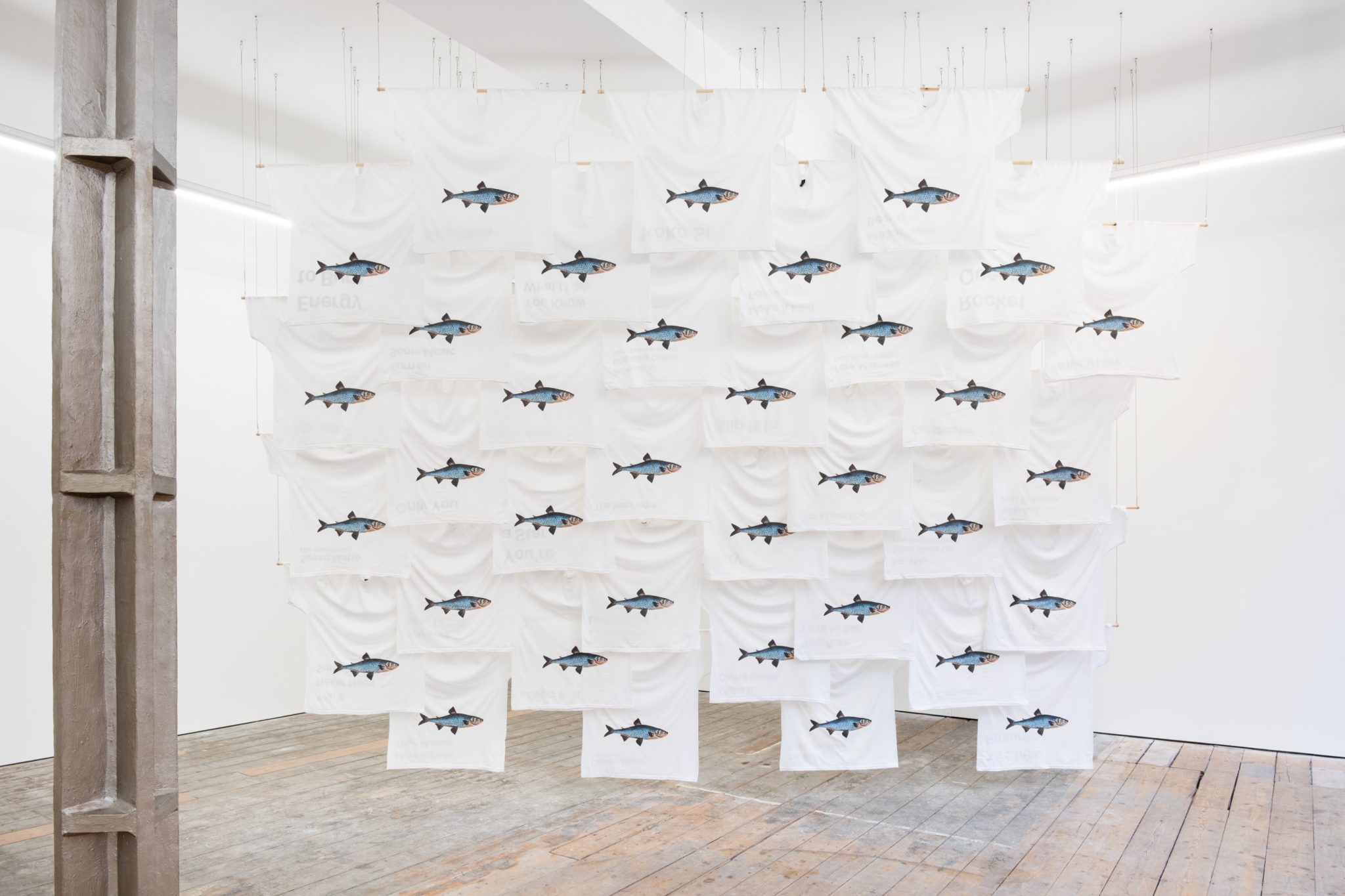
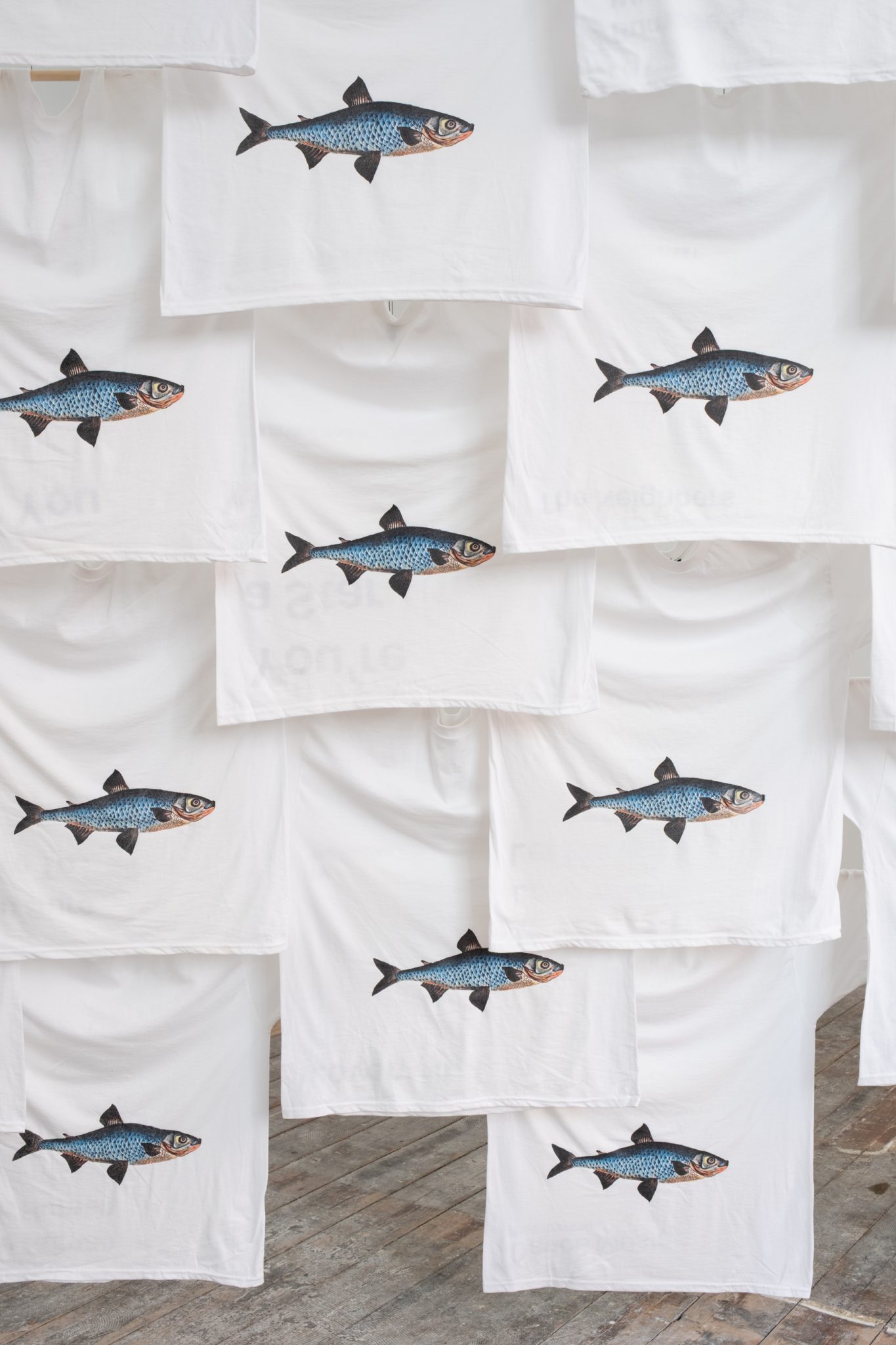
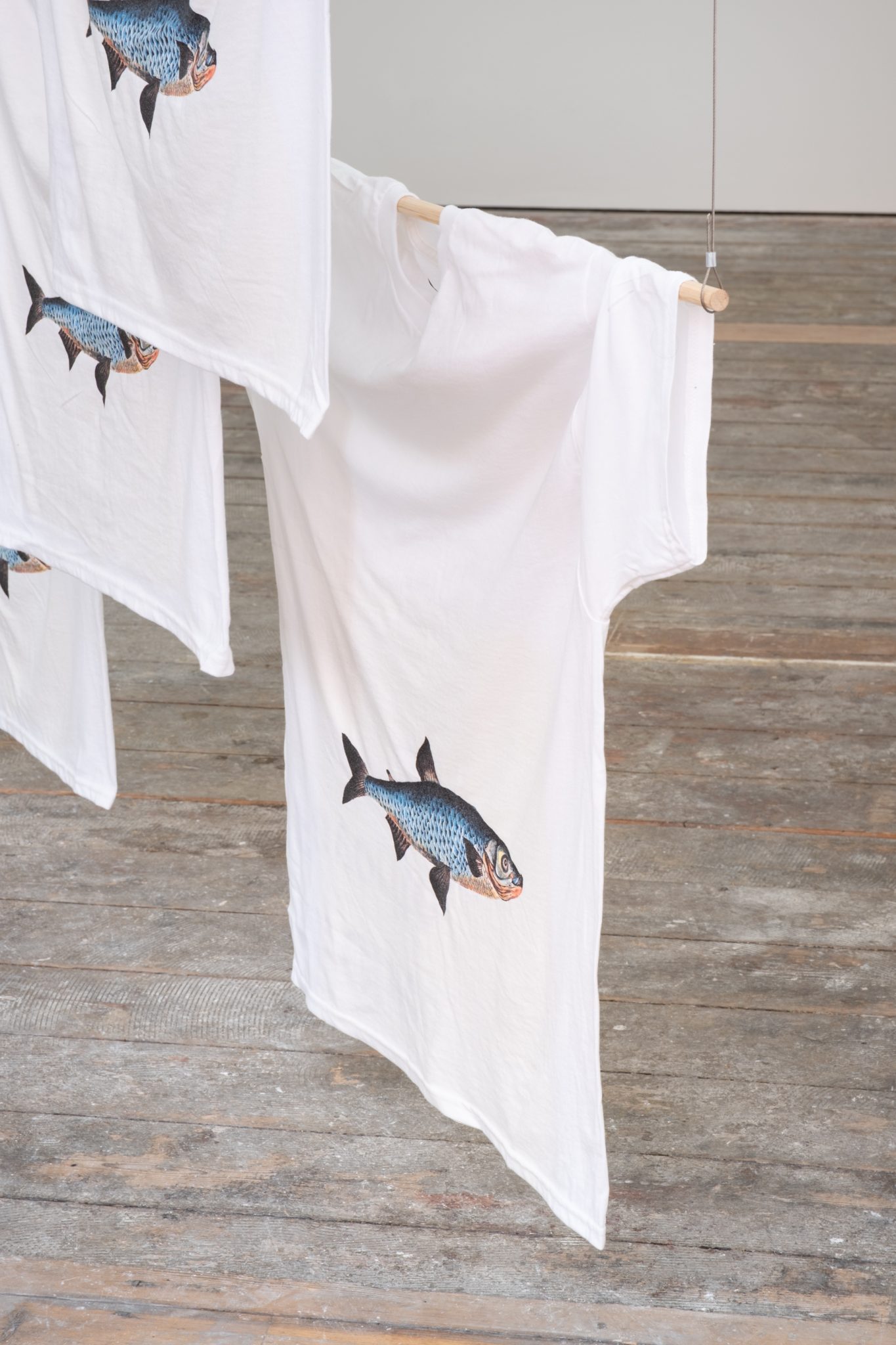
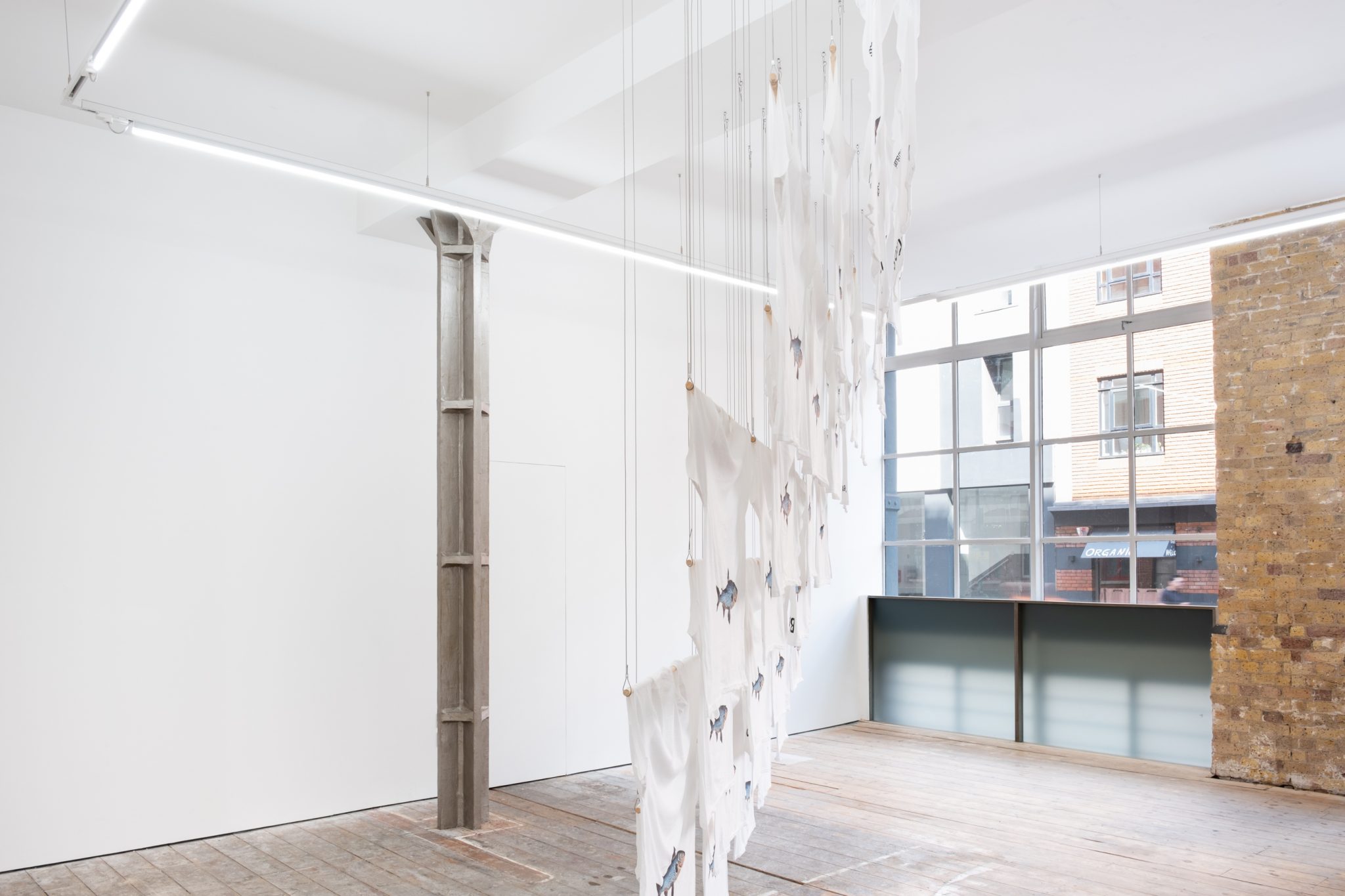
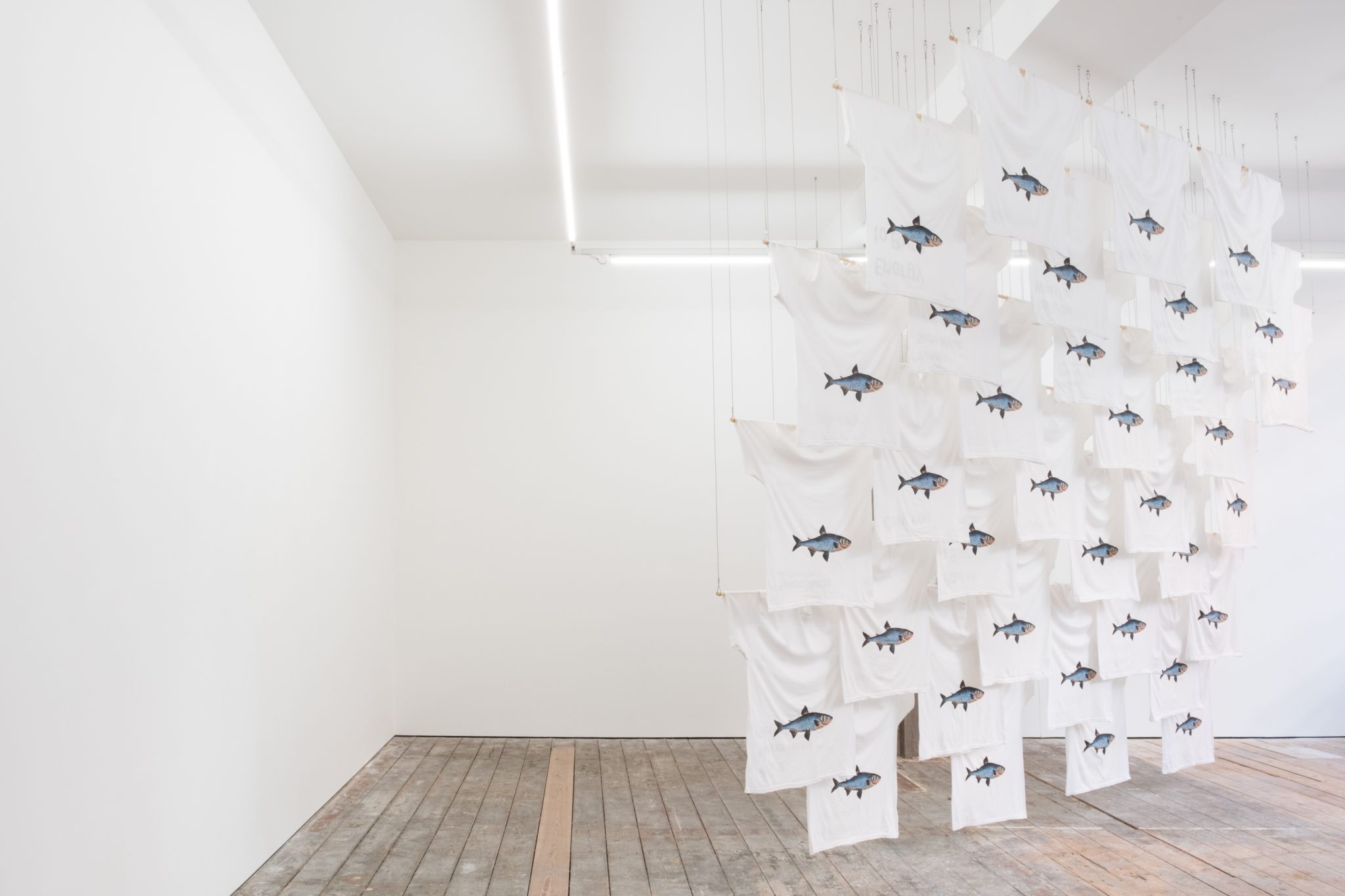
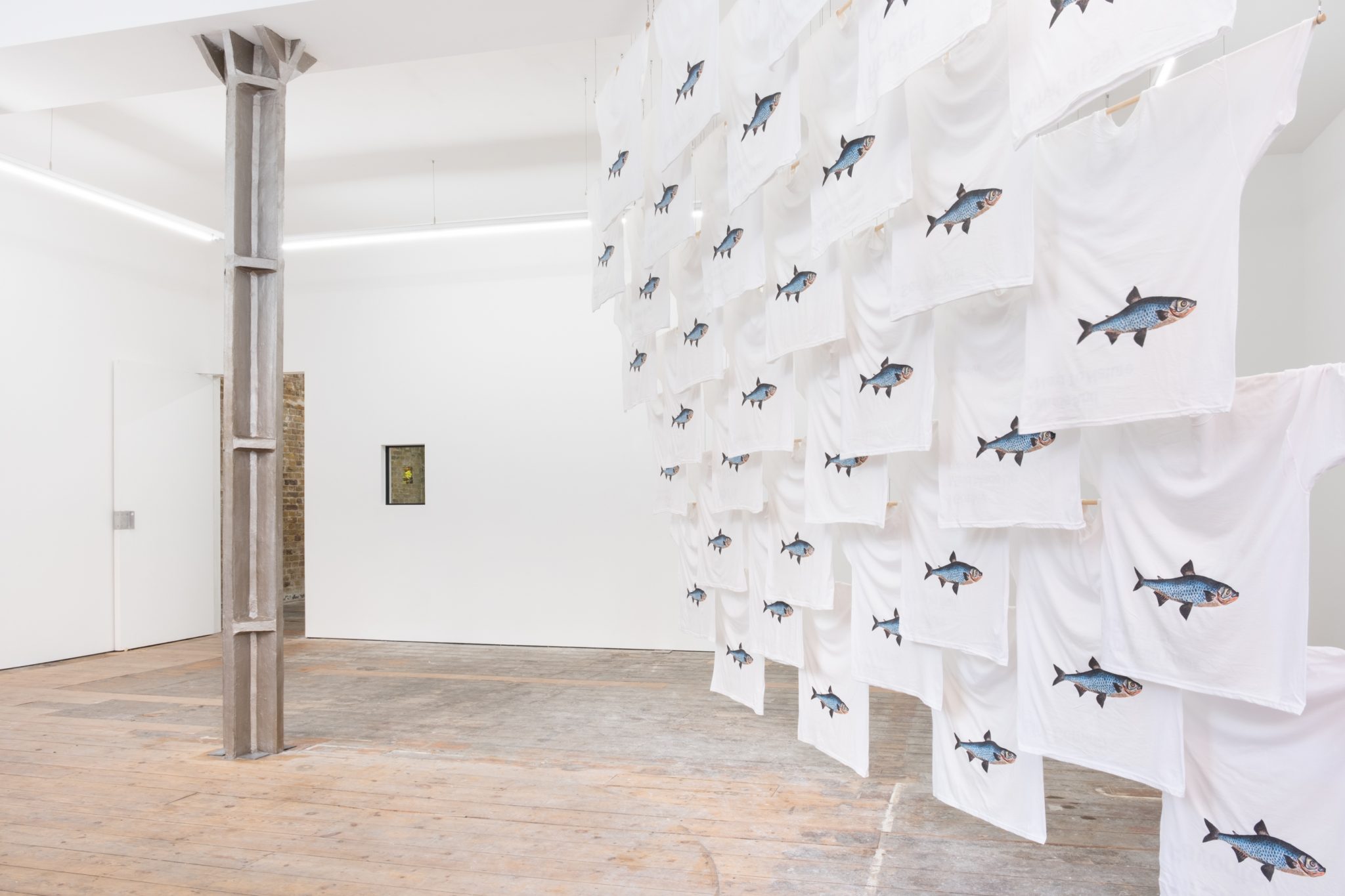
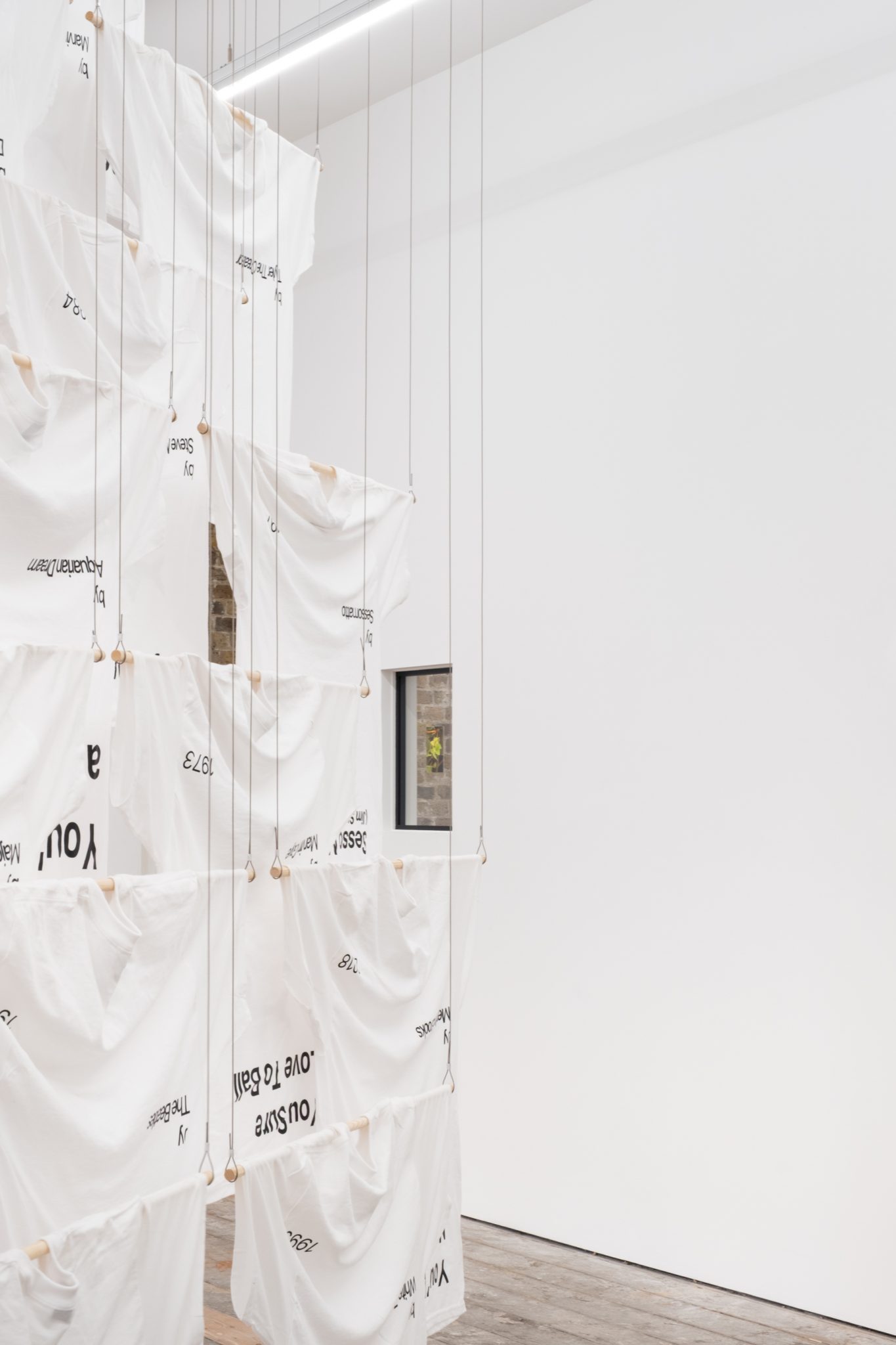
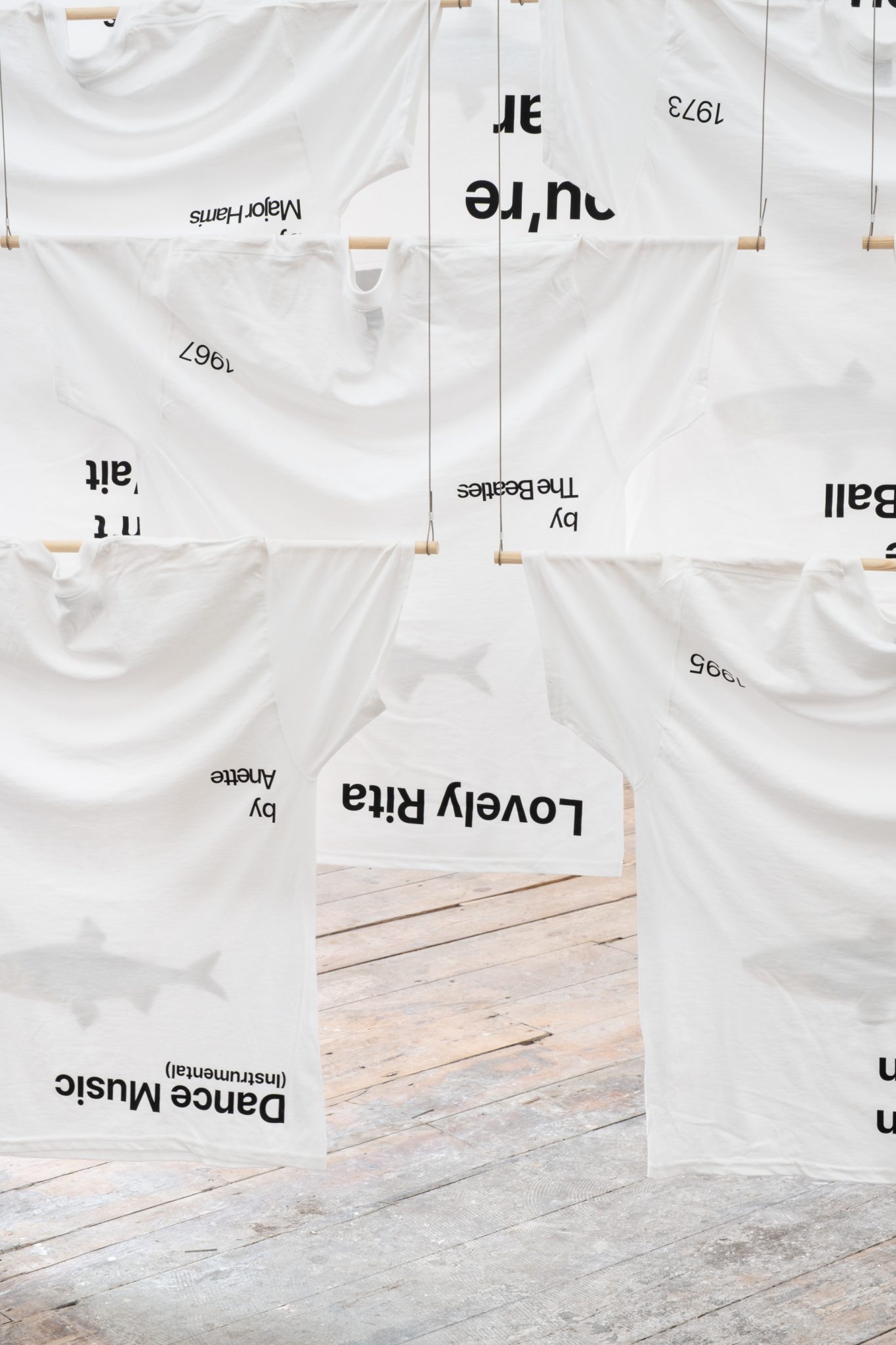
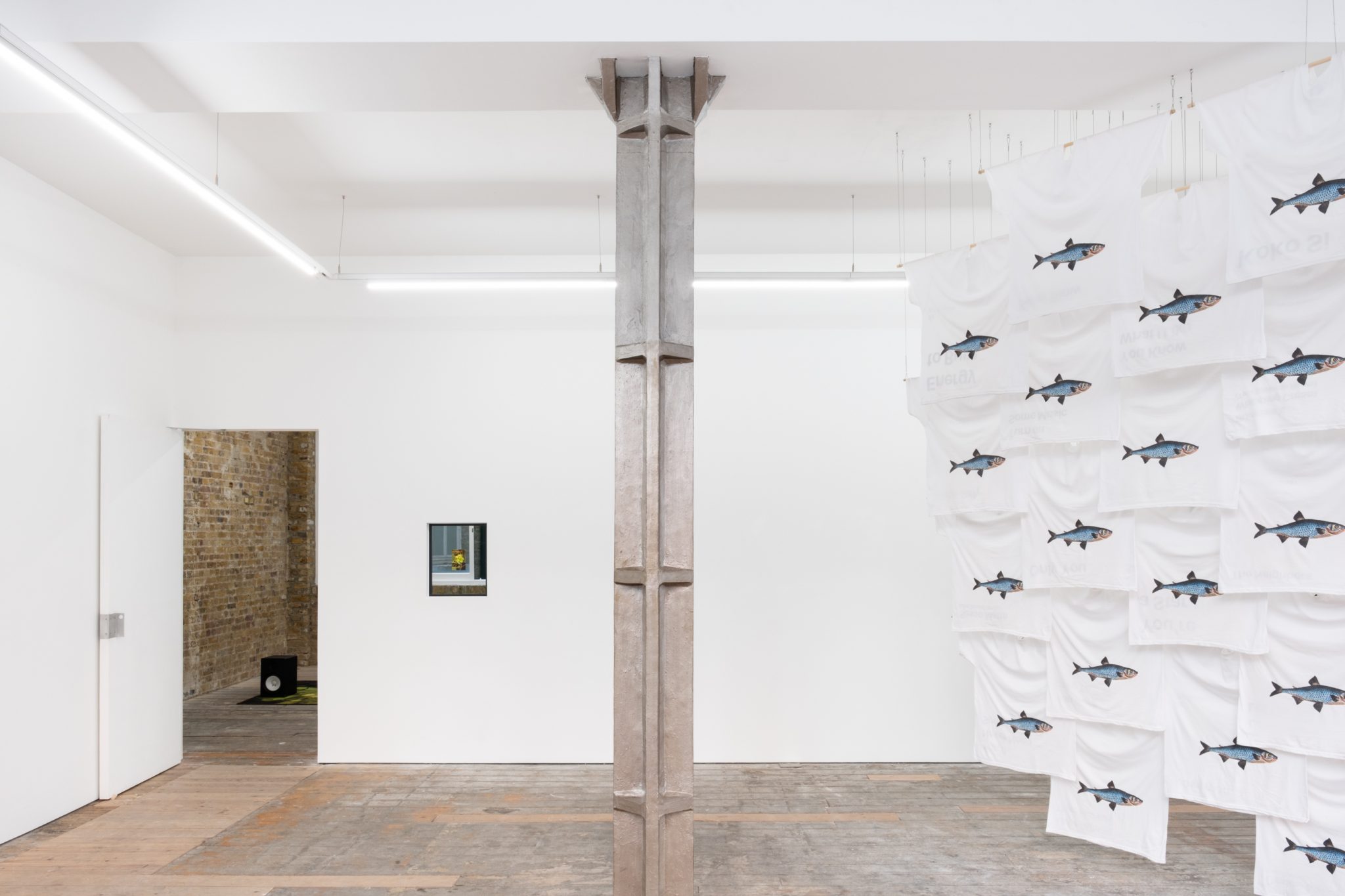
Titled after a patent filed in 1821 by Thomas L. Jennings following his invention of dry scouring – the precursor to modern dry cleaning – Patent 3306x centres on an installation of T-shirts bearing a painted fish copied from a nineteenth-century taxonomic illustration. Originally conceived as a scientific diagram intended to record newly ‘discovered’ species, the image embodies the classificatory ambitions of Victorian natural history and, more broadly, the colonial impulse to catalogue the world. Transferred onto an everyday garment, the fish shifts from scientific record to unstable symbol of discovery, circulation and appropriation.
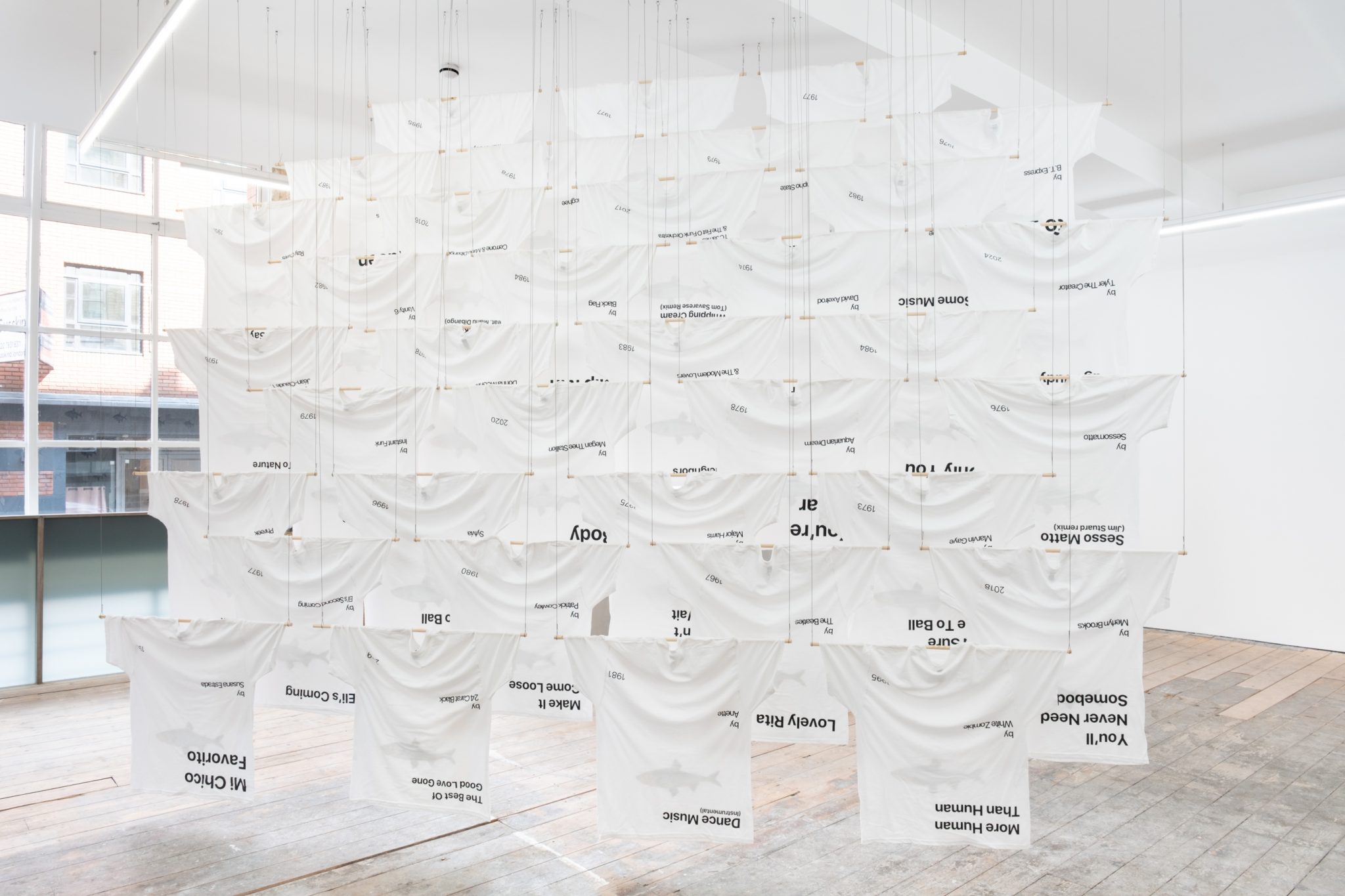
The reverse of each shirt features an inverted list of songs that incorporate recorded sex sounds. Spanning the mid-1960s to the present and compiled as a growing archive, these references trace the emergence of this musical device following the sexual revolution while pointing to the contemporary economies of streaming, fandom and digital cataloguing. Juxtaposing the disciplinary language of scientific taxonomy with the circulation of mass-cultural ephemera, Boakye-Yiadom places seemingly incompatible systems of knowledge on the same garment. In both cases, the artist seems less concerned with what is classified than with the persistent cultural desire to classify.
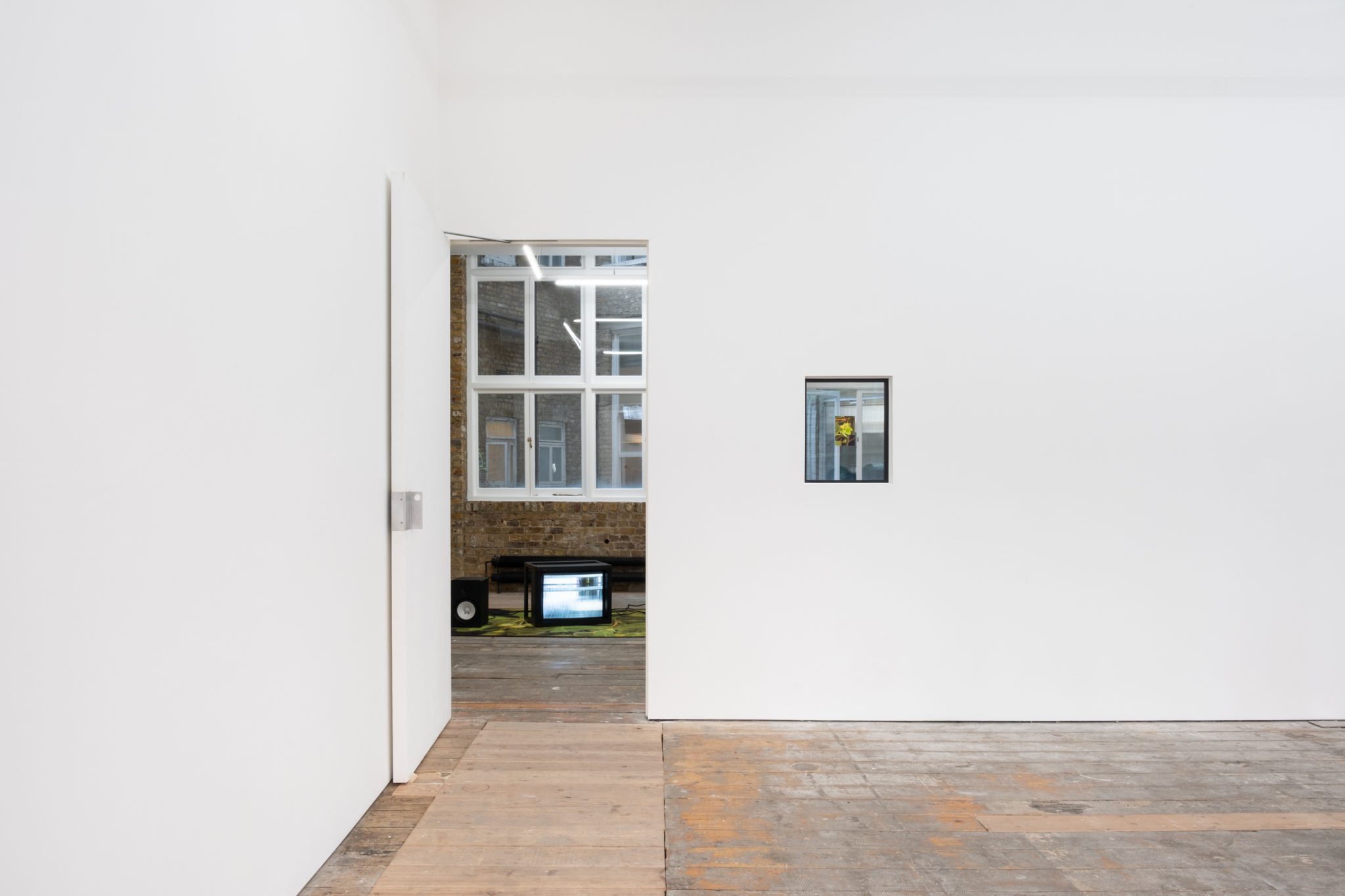
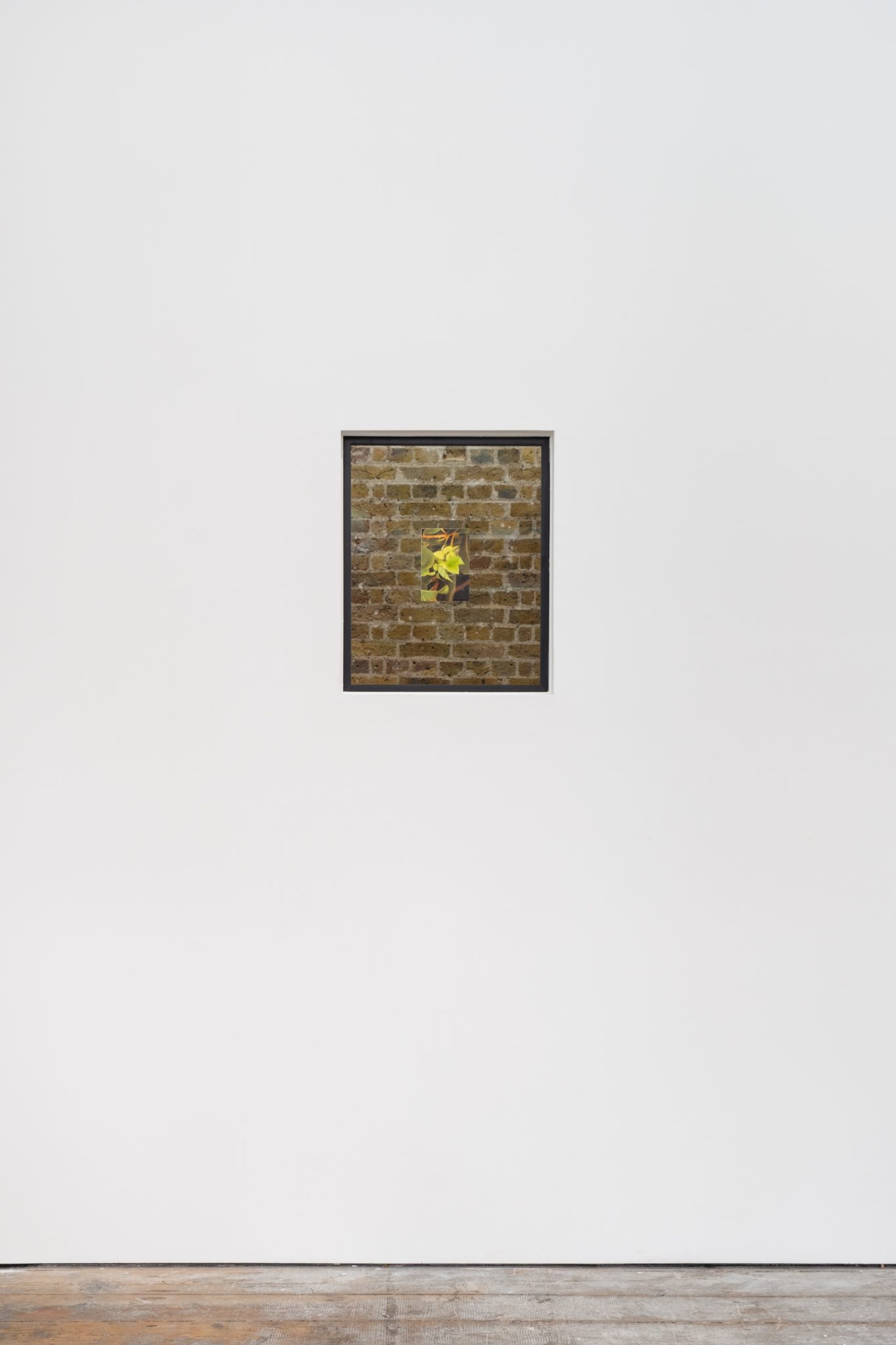
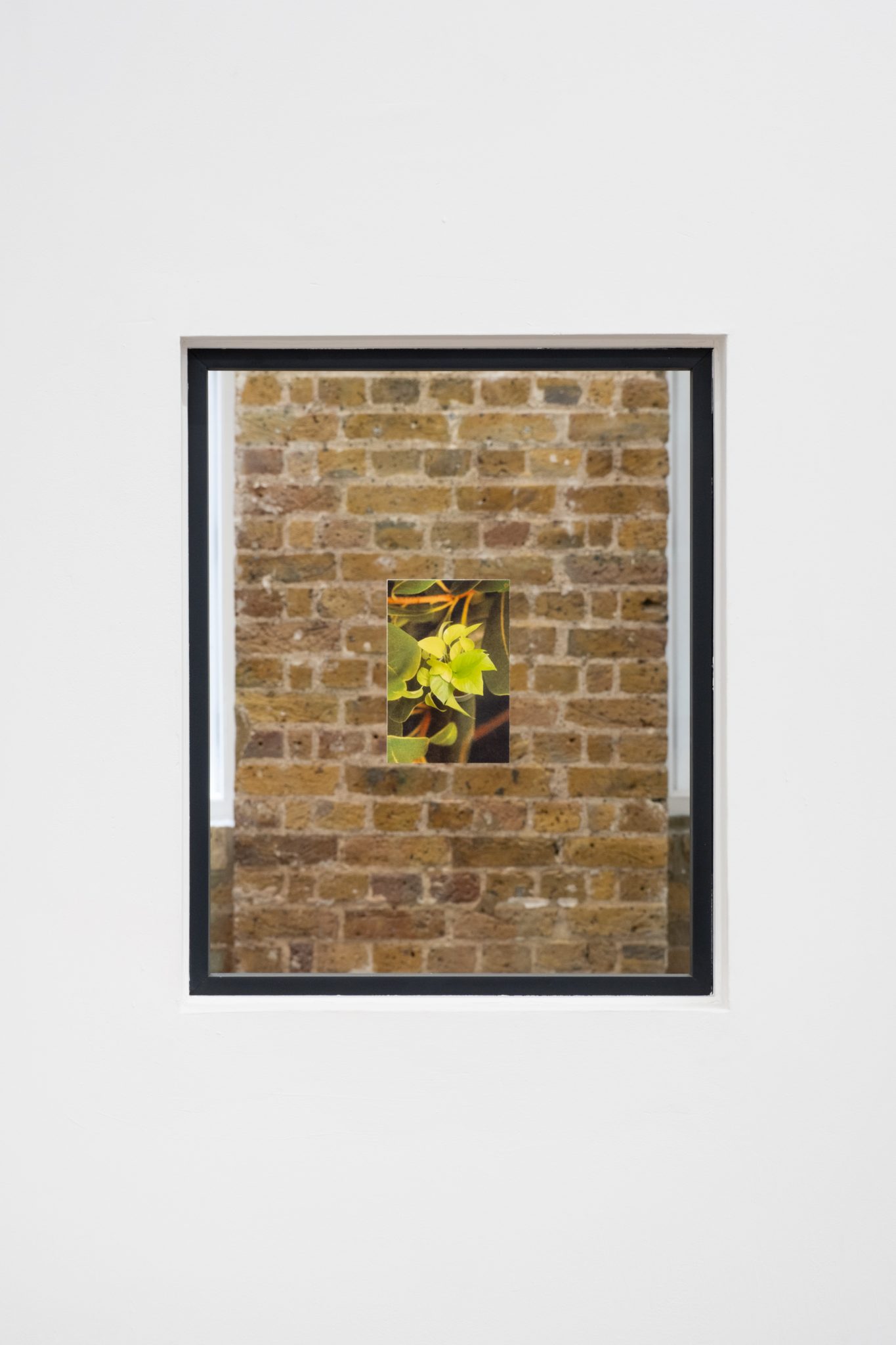
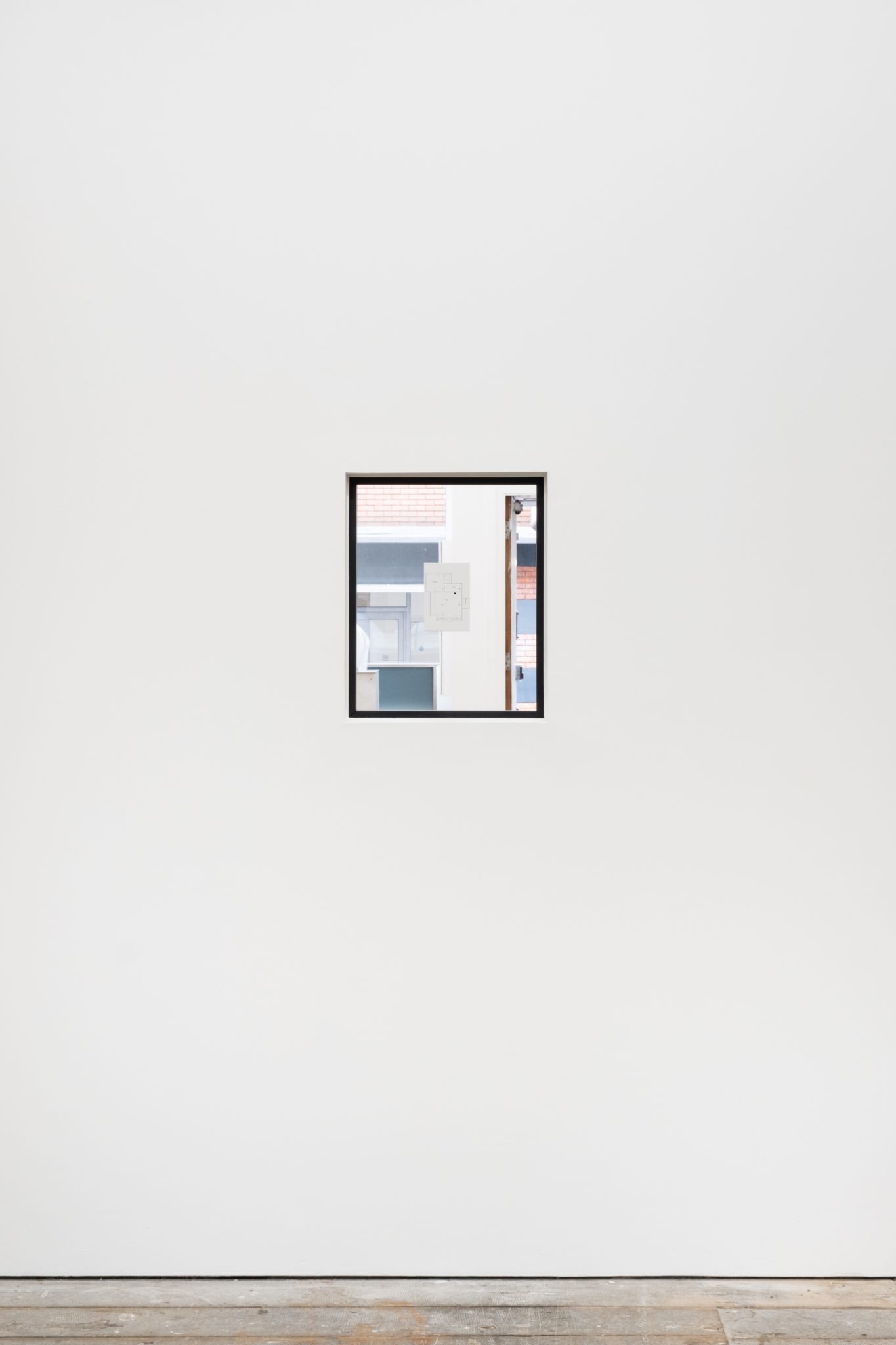
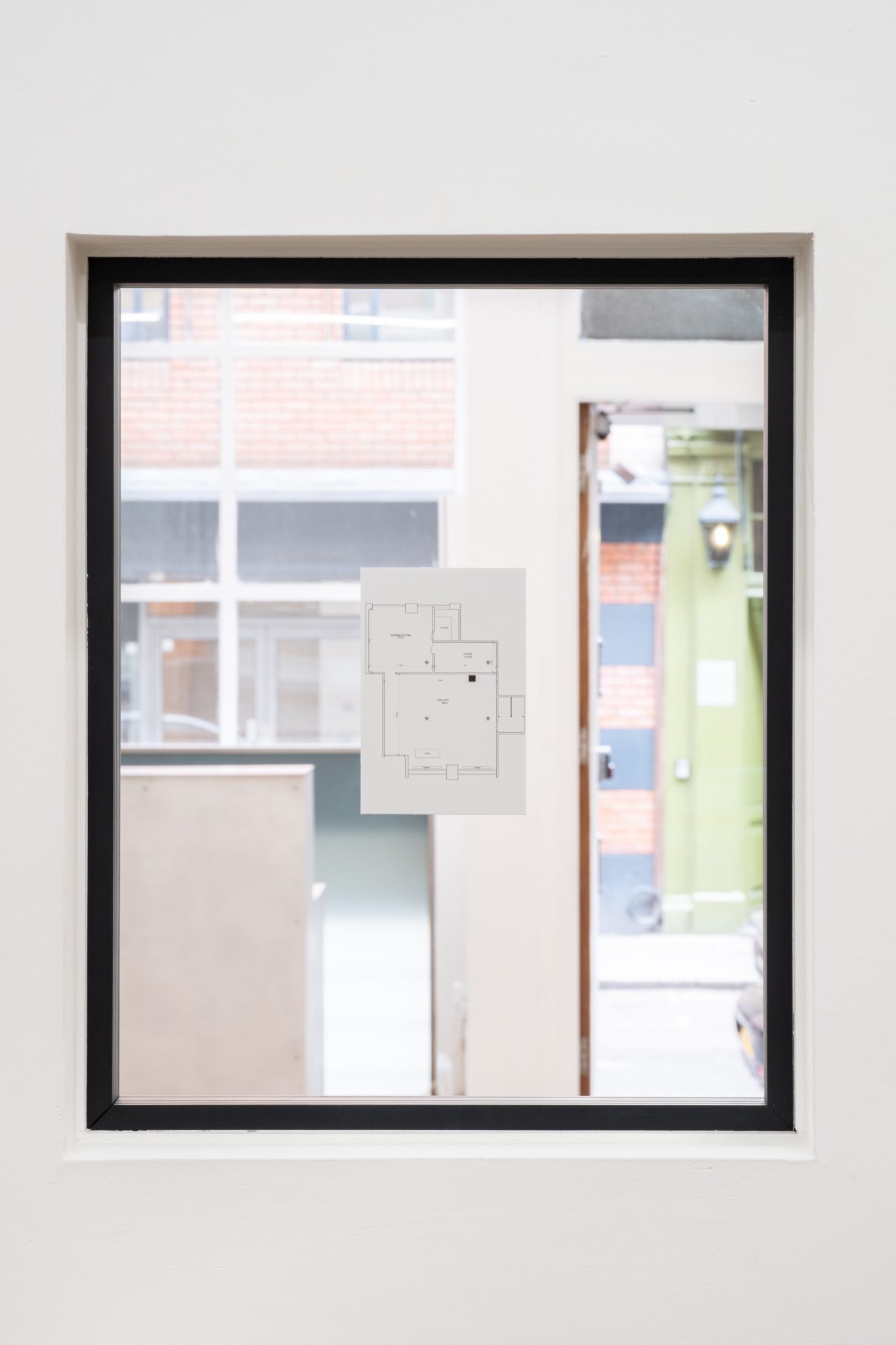
This investigation extends throughout the exhibition, where acts of collecting, reproduction and circulation unsettle distinctions between original and copy, document and artwork, high and low culture. Inserted within a custom aperture cut through the gallery wall, a double-sided photograph depicts a Neon Pothos plant on one side and the gallery floor plan on the other. The work is the Artist Proof for a protocol in which Boakye-Yiadom proposes to take a new photograph of his house plant every time the edition is acquired, each print bearing on its reverse the floor plan indicating where the plant was photographed or exhibited.
Functioning simultaneously as artwork, instruction and archival record, the work documents its own circulation over time. Although theoretically unlimited, the edition remains finite, continuing only for as long as both artist and plant survive.
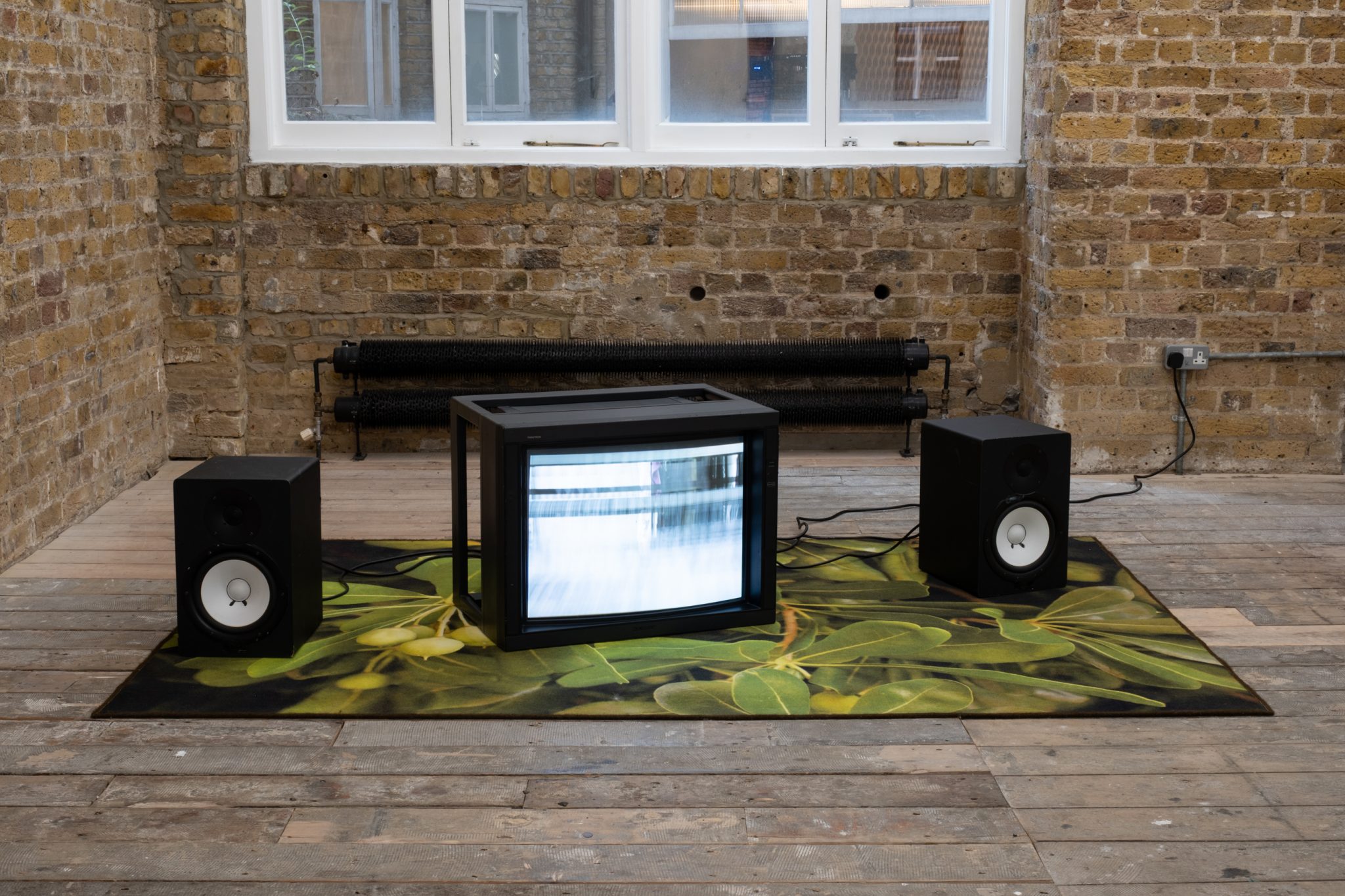
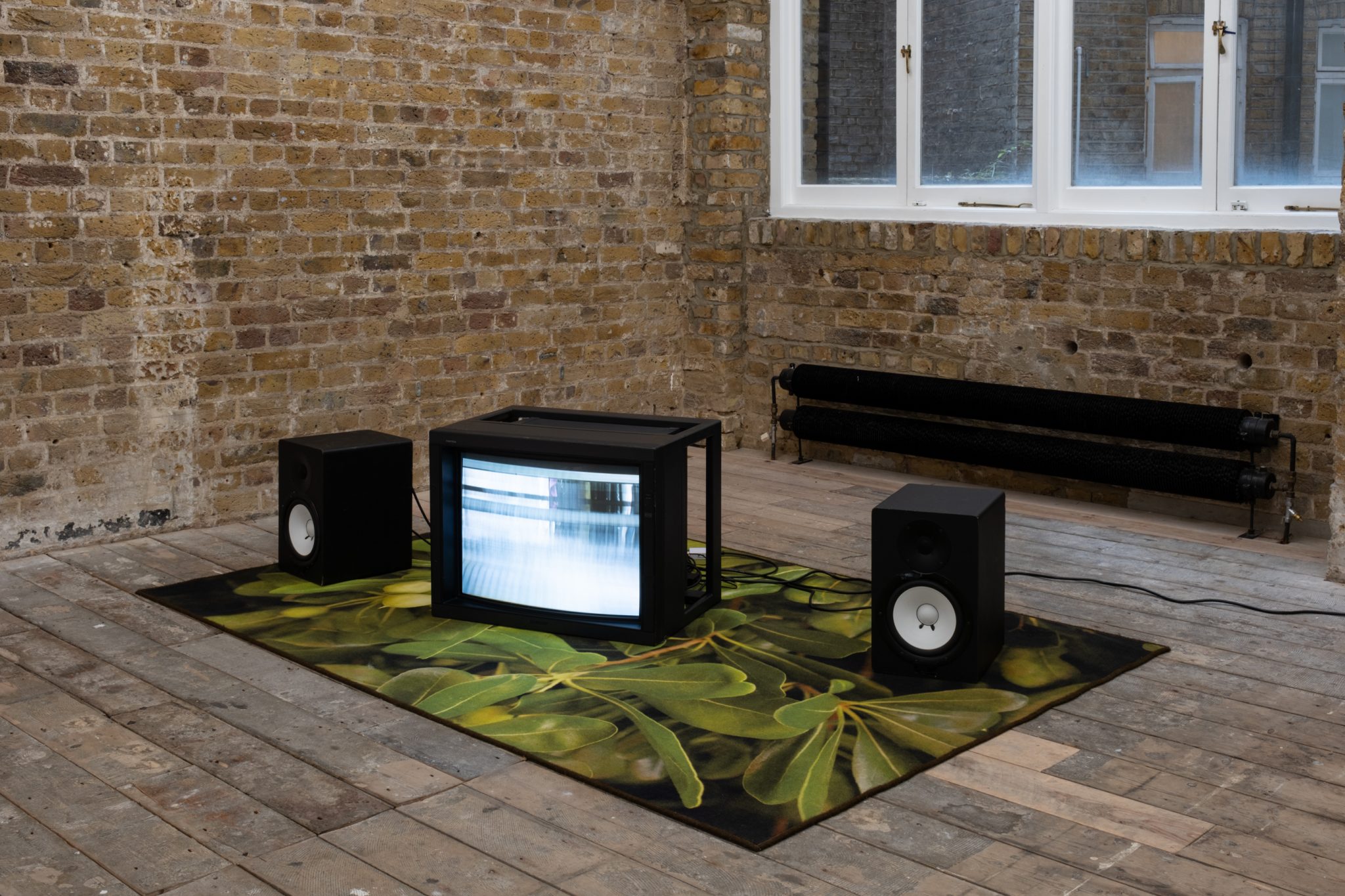
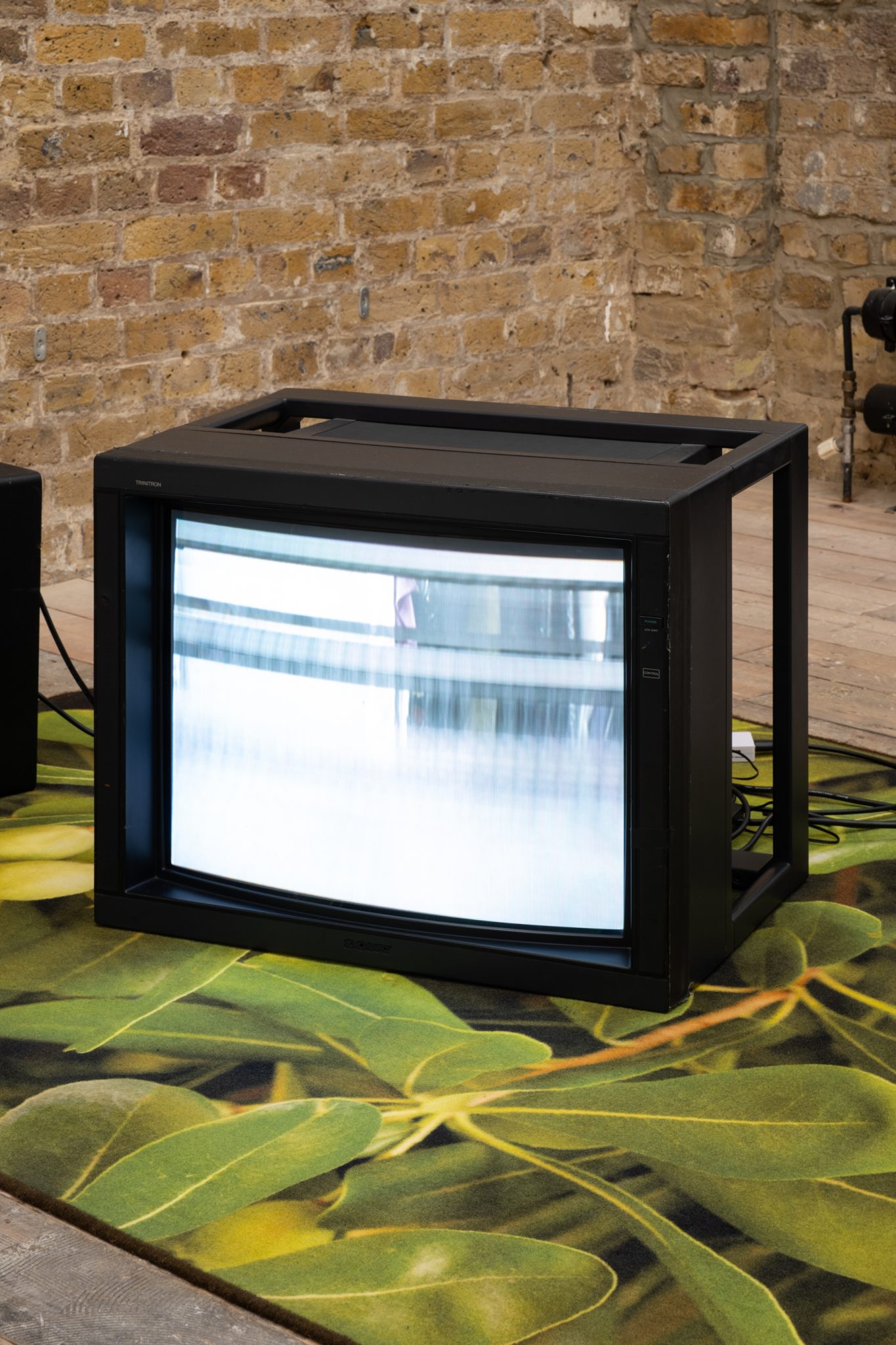
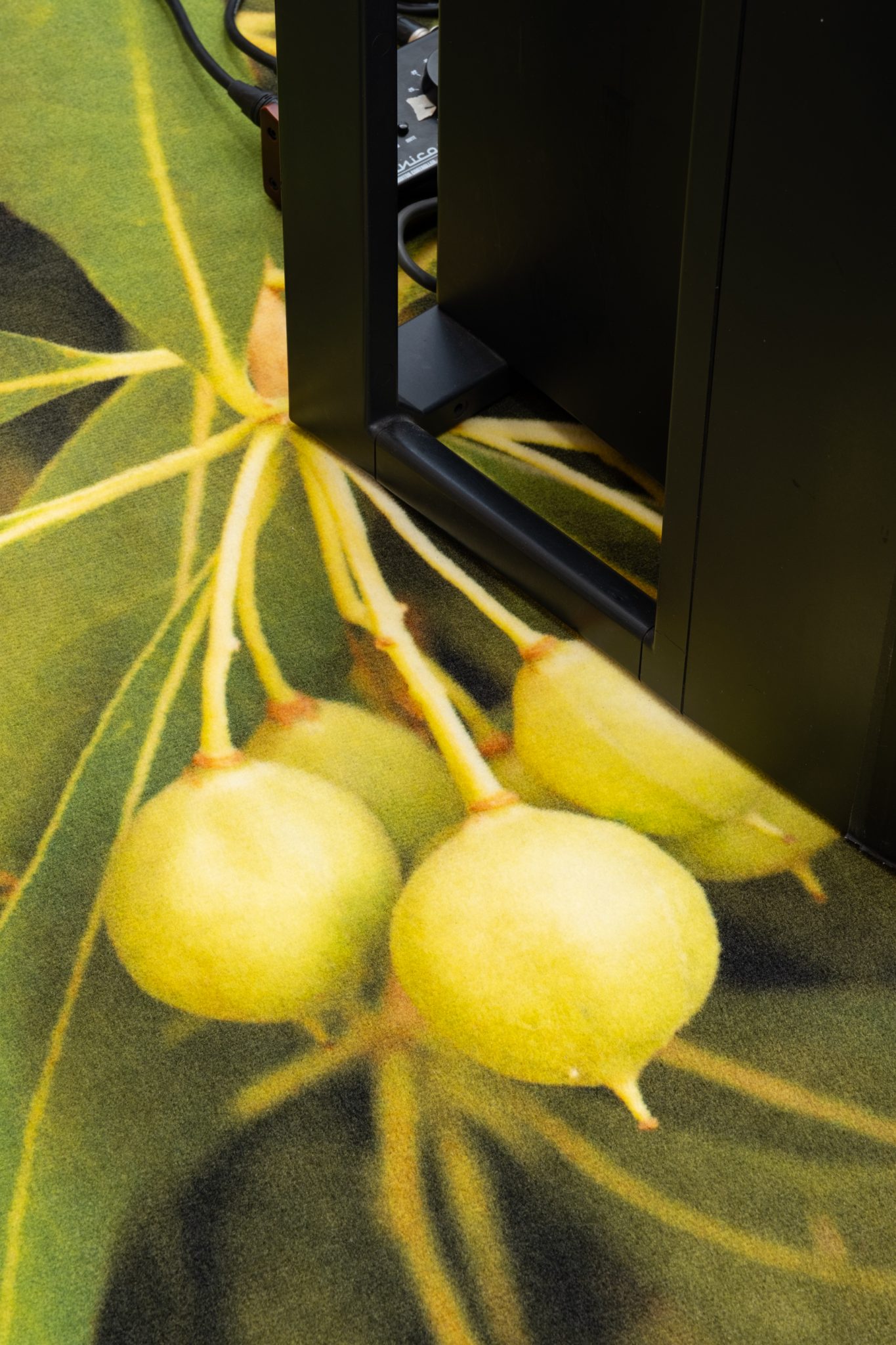
In the second room, Boakye-Yiadom presents an installation composed of a drum mat, a TV monitor and speakers. Used in previous exhibitions in which Boakye-Yiadom recorded himself and invited viewers to witness him learning to play the drums (e.g. Goldsmiths CCA, 2020; Frieze London, 2024), the mat – on which the Neon Photos plant was originally photographed– features an image of a tropical Calophyllum inophyllum tree. Supporting a looping video documenting an unrealised proposal for his exhibition at NıCOLETTı, which was initially centring on a salvaged dry-cleaning carousel, the installation operates as a provisional studio within the gallery: a space of rehearsal, experimentation and productive failure.
Rather than focusing on finished forms, Patent 3306x foregrounds processes of learning, revision and incompletion. The inclusion of abandoned projects and speculative protocols offers a counterpoint to the classificatory impulse that has shaped Western systems of knowledge since the Enlightenment. In Boakye-Yiadom’s work, on the contrary, images, objects and meanings remain deliberately open, accumulating significance as they move through different contexts of use.